
Buying guide
Best drip irrigation systems for potted plants: 7 practical kits
DIG FM01AS is the clearest faucet-fed choice for up to 10 pots or hanging baskets. GARDENA AquaBloom is better when the containers have no faucet nearby and you can refill a reservoir.
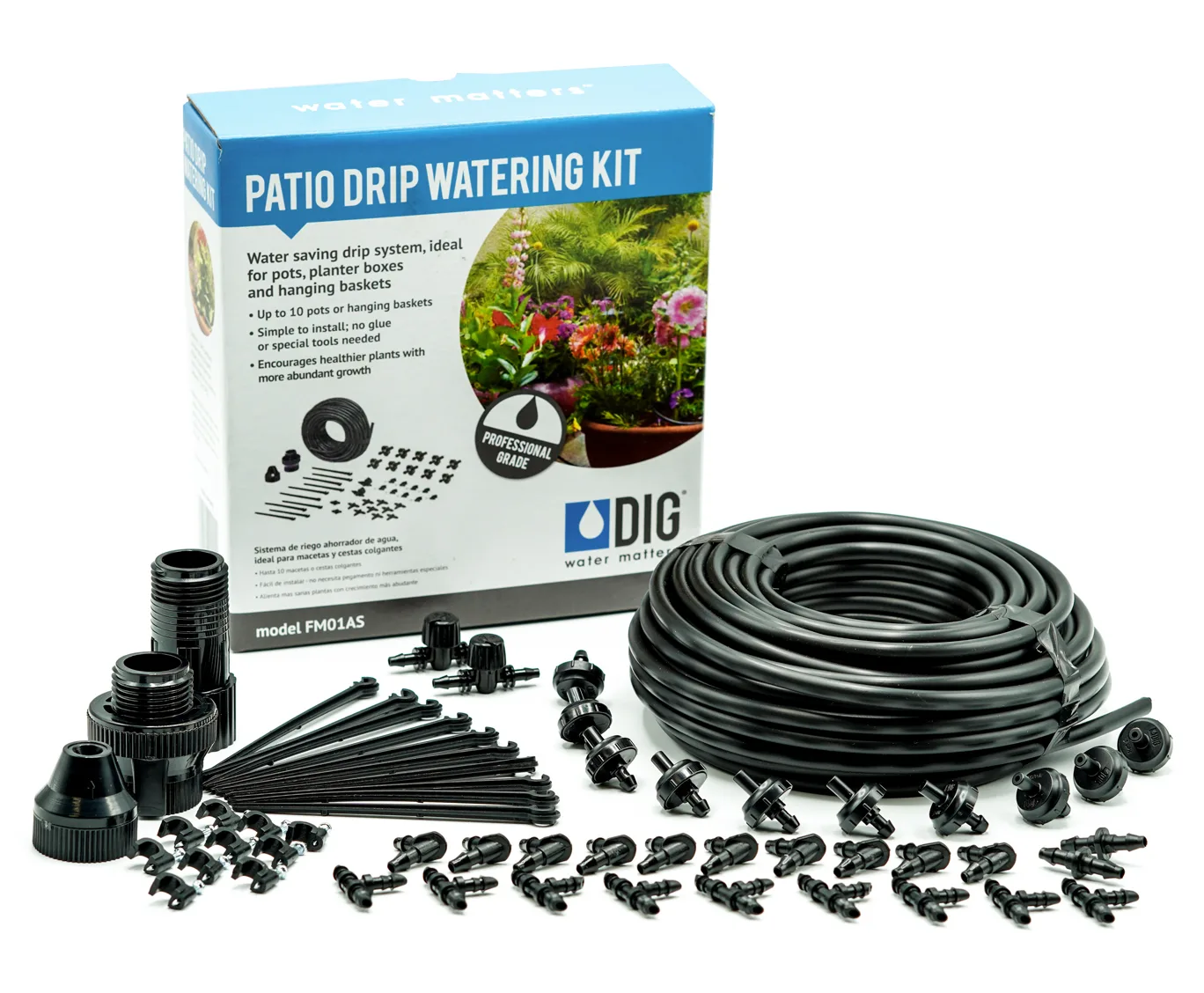
Potted plants need a short, tidy route from the water source to each container. DIG FM01AS is the best direct match for a faucet-fed group because its product record covers up to 10 hanging baskets or pots, with expansion to 15, 60 feet of 1/4-inch microtube, and 10 pressure-compensating emitters. GARDENA AquaBloom is the better choice for a balcony or patio without a faucet connection because it uses a solar pump and a reservoir.
Container irrigation is easy to overbuy. A large landscape kit may have more tubing than you can hide and more parts than a few pots need. Count containers, measure the route, and decide whether a faucet or reservoir will supply the system before you compare features.
She Gardens used the locked manufacturer records. She Gardens did not install or test these systems. AquaBloom’s plant count, reservoir size, programs, and fill interval are manufacturer-listed figures. Actual watering depends on plant needs, weather, placement, and the selected program.
Potted-plant irrigation comparison
| Product | Best fit | Useful evidence | Main drawback |
|---|---|---|---|
| DIG FM01AS Patio Drip Watering Kit | Faucet-fed pots | Up to 10 containers; 60 ft microtube; 10 emitters | Limited versus landscape kits |
| GARDENA AquaBloom Automatic Plant Watering System | Pots without a faucet | Solar pump; 2.77-gallon reservoir; up to 20 plants | Reservoir needs refilling |
| DIG GRWKIT-12 Home Grow Drip Kit | Small grow area | Home-grow kit for container gardens | Capacity is not stated |
| DIG SM50 Adjustable Micro Sprayer Kit | Container clusters | Adjustable spray for small beds and pockets | May wet foliage |
| DIG SM500 Adjustable Micro Sprayer Kit | Broader container group | Adjustable spray for beds and greenhouse areas | Spray is wind-exposed |
| DIG ML50 Raised Bed Drip Irrigation Kit | Pots beside a bed | 50 ft dripline; five 10 ft lines | More kit than a few pots need |
| DIG GE200 Drip and Micro Sprinkler Kit | Pots plus beds | 50 ft microtube; 20 emitters; 11 sprayers | Largest and most involved option |
Best faucet-fed kit: DIG FM01AS
DIG FM01AS is built around patio containers. Its manufacturer page lists up to 10 hanging baskets or pots, expansion to 15, 60 feet of 1/4-inch microtube, 10 pressure-compensating drip emitters, and a preset 25 PSI regulator with a backflow preventer.
That combination keeps the decision simple. Count your pots, place one emitter at each container, and measure the distance from the faucet. The kit is less suitable when the same line must also cover a lawn, tree row, or large bed.
Pros: Direct container focus; up to 10 pots or baskets; expandable to 15; 60-foot microtube; pressure parts included.
Cons: Limited for larger areas; needs a faucet; exact warranty and retailer stock are not stated.
Check the current DIG FM01AS listing
Best without a faucet: GARDENA AquaBloom
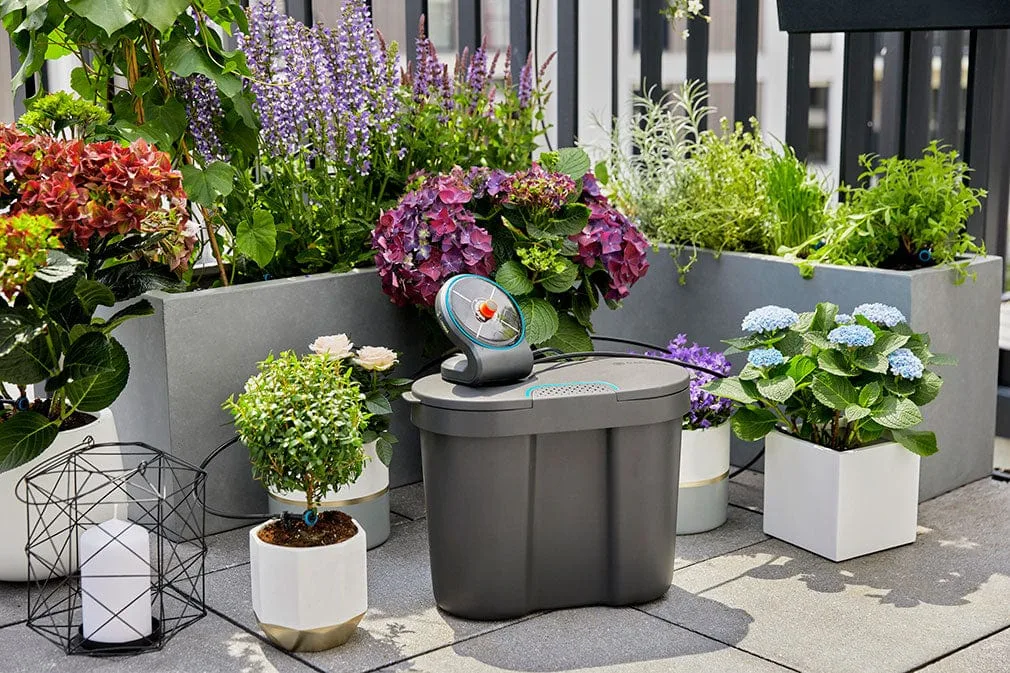
AquaBloom is the strongest match for pots on a balcony, patio, or other spot without a nearby faucet. GARDENA lists a solar-powered pump and controller, a 2.77-gallon or 10.5-liter reservoir, up to 20 plants, 20 pressure-equalizing 0.13 GPH inline drip heads, 65 feet of 3/16-inch tube, 14 programs, and up to 12 days per fill on the product page.
The reservoir is the tradeoff. You avoid a permanent faucet route, but you must keep water available and refill it. The system also belongs with containers, not a lawn or a large ground-level bed.
Pros: Solar pump and controller; no faucet connection; up to 20 plants; 65 feet of tube; pressure-equalizing heads; multiple programs.
Cons: Reservoir needs refilling; plant count and fill interval depend on program and conditions; not a lawn system.
Check the current GARDENA AquaBloom listing
Other options for container groups
DIG GRWKIT-12
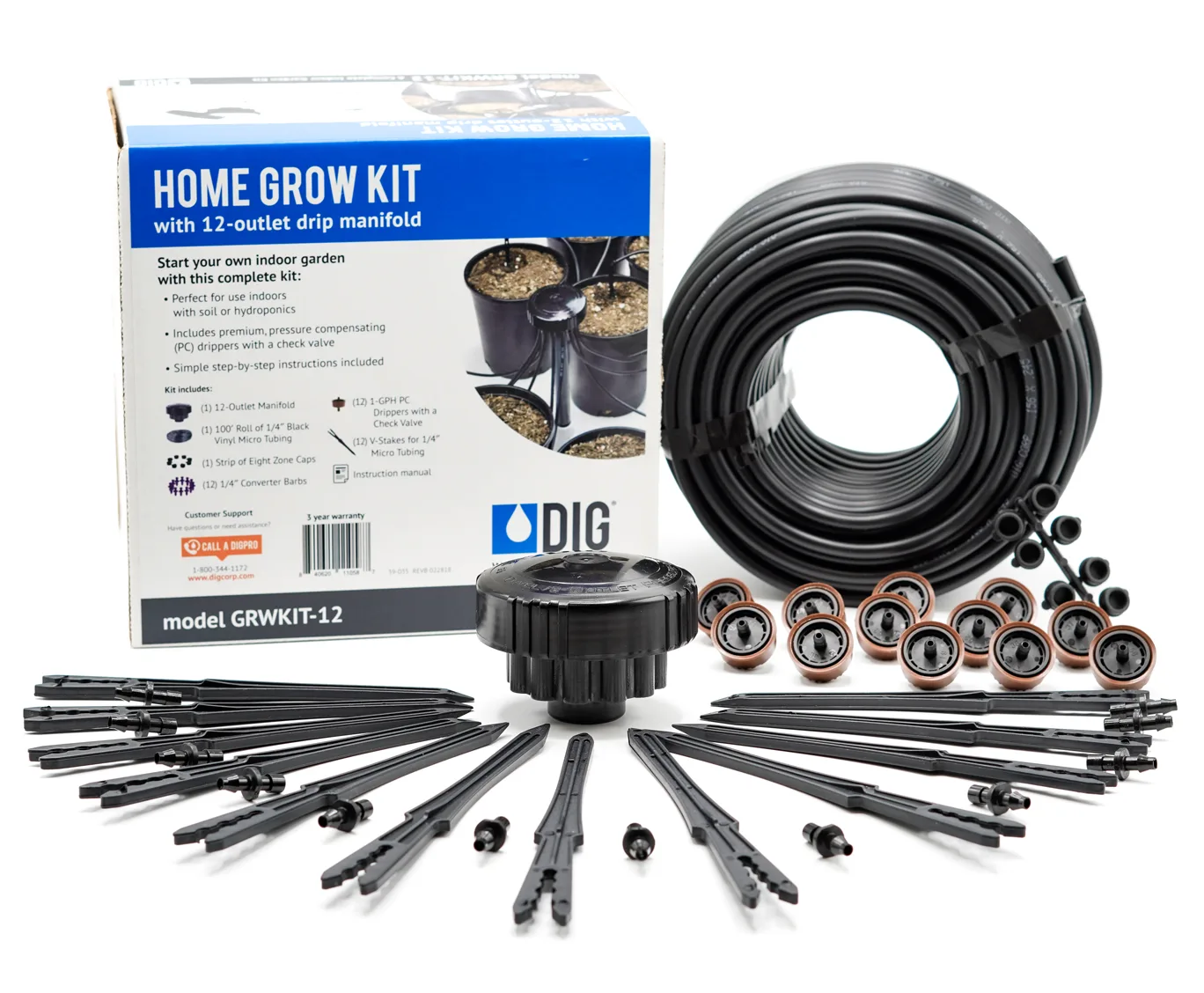
GRWKIT-12 is a compact home-grow kit for small protected or container gardens. The DIG record does not state its tubing length, emitter count, or coverage. That makes it a reasonable candidate for a small grow area, but a poor choice to make without measuring.
Pros: Container and grow-area focus; compact setup; suited to a pressurized faucet.
Cons: Capacity is not documented in the record; needs a faucet; less clear than FM01AS.
Check the current DIG GRWKIT-12 listing
DIG SM50
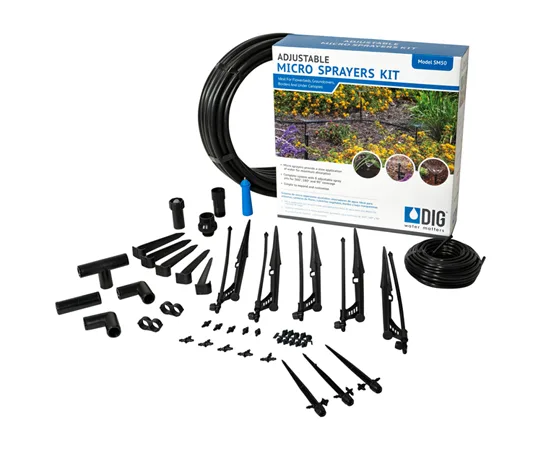
SM50 is for a small cluster where adjustable spray makes more sense than one emitter per pot. DIG lists it for small beds, greenhouse benches, and landscape pockets on the manufacturer page. The source record does not state coverage or included-part count.
The spray pattern can cover several nearby containers, but it may wet leaves and lose water in wind. Use it when the containers form a patch rather than a long line.
Pros: Adjustable pattern; fits small pockets and benches; can cover a cluster.
Cons: Coverage is not stated; may wet foliage; less precise than individual emitters.
Check the current DIG SM50 listing
DIG SM500
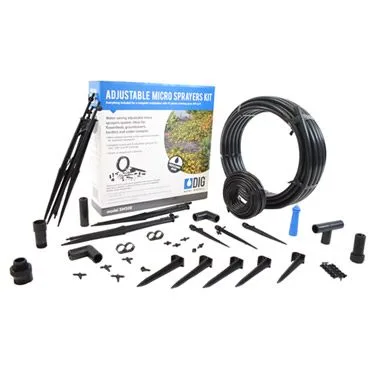
SM500 moves the same idea toward a broader landscape or greenhouse area. DIG describes it for landscape beds, shrubs, trees, and greenhouse areas where a micro-spray pattern fits the planting on the product page. Coverage and included-part count are not stated in the locked record.
It can be useful beside containers when the plants occupy a wider group. Spray is more exposed to wind and evaporation than dripline, so it is not the automatic choice for closely spaced pots.
Pros: Adjustable micro-spray; suits broader groups; usable in greenhouse areas.
Cons: Coverage is not stated; wind can affect spray; less targeted than container emitters.
Check the current DIG SM500 listing
DIG ML50
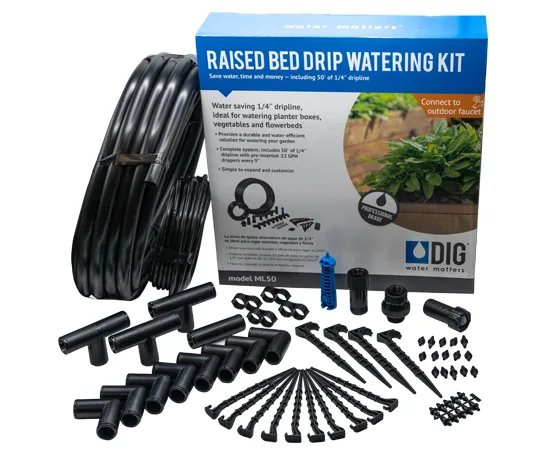
ML50 makes sense when pots share a route with a raised bed. DIG lists 50 feet of 1/4-inch dripline, five 10-foot lines, 9-inch emitter spacing, and up to 150 square feet on its model page. It also includes a regulator, filter, backflow preventer, and 1/2-inch supply tubing.
For only a few pots, the extra parts are unnecessary. For containers plus a bed, the defined lines and expansion path are useful.
Pros: 50-foot dripline; five short lines; regulator and filter; documented spacing and area.
Cons: More than a few pots need; 9-inch spacing may not match every container; faucet-fed.
Check the current DIG ML50 listing
DIG GE200
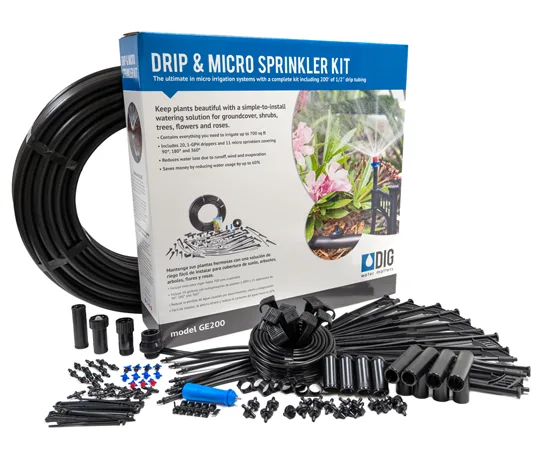
GE200 is the large option for containers mixed with beds and landscape zones. DIG lists up to 700 square feet, 200 feet of 1/2-inch tubing, 50 feet of 1/4-inch microtube, 20 1-GPH emitters, and 11 micro-sprayers on the manufacturer page.
It is capable, but most container-only patios do not need this much hardware. Choose GE200 when the pots are one piece of a larger watering layout.
Pros: Large supply tubing; 20 emitters; 11 sprayers; documented area up to 700 square feet; expansion beyond 1,000 square feet.
Cons: More parts than a container group needs; spray may wet leaves; requires more careful zoning.
Check the current DIG GE200 listing
Buying criteria for potted plants
Count pots and baskets, then mark their positions. FM01AS lists 10 emitters for up to 10 containers, with expansion to 15. AquaBloom lists up to 20 plants, but its reservoir and fill interval become part of the routine. The count is a starting point, not a watering guarantee.
Measure from faucet or reservoir to the farthest pot. Keep the main route tidy and leave enough slack for moving a container. A short, direct path is easier to inspect than extra tubing hidden behind a railing.
Choose an emitter when each pot needs its own point of delivery. Choose a sprayer for a patch of plants with similar needs. A 1/4-inch microtube route works for containers, while AquaBloom’s 3/16-inch tube and inline heads are part of its own system.
If the pots are in a small space, the small-space hose guide may help with the faucet connection. If the setup also waters hanging baskets, keep FM01AS in mind because it explicitly includes them in its use case.
For a short supply line to patio containers, see the small-space hose guide and the low-water-pressure hose guide.
Frequently asked questions
What is the best drip system for potted plants?
DIG FM01AS is the clearest faucet-fed choice for up to 10 pots or baskets. GARDENA AquaBloom is the better fit when the containers have no faucet nearby and a refillable reservoir is acceptable.
Can one emitter water one pot?
FM01AS is designed around 10 pressure-compensating emitters for up to 10 pots or baskets. Follow the kit instructions and place each emitter where it can wet the container’s root area.
Is a solar watering system good for a balcony?
AquaBloom is made for balcony, patio, pot, and hanging-container watering without a faucet connection. Its solar pump and reservoir remove the faucet route, while refilling remains part of ownership.
Do potted plants need a micro-sprayer?
Not by default. Individual drip emitters are easier to aim at separate pots. A micro-sprayer can suit a close cluster, but it may wet foliage and is more exposed to wind.
Recommendation
Choose DIG FM01AS for a faucet-fed patio group. Choose AquaBloom for containers away from a faucet. Use GRWKIT-12 for a small grow area, and step up to GE200 only when pots share a larger garden layout.
Sources and methodology
Facts came from locked product pages for DIG FM01AS, GARDENA AquaBloom, DIG GRWKIT-12, SM50, SM500, ML50, and GE200. She Gardens did not test these systems. The ranking follows the locked irrigation manifest dated 29 August 2026.