
Buying guide
Best irrigation systems for flower beds: 7 kits for mixed plantings
DIG GE200 is the strongest starting point for a flower bed that mixes plant sizes and shapes. G77AS is the simpler landscape-oriented choice when you want point-source emitters and a flexible route.
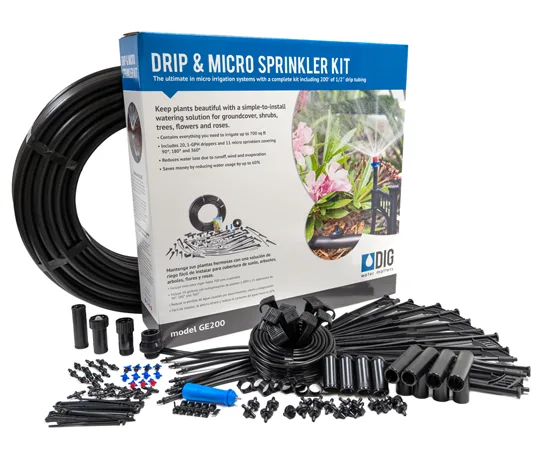
Flower beds rarely grow in perfect rows. Plant height, spacing, and bed shape change across a border, so a useful irrigation system needs more than a long hose. DIG GE200 leads this list because it combines 1-GPH emitters, adjustable micro-sprayers, 200 feet of 1/2-inch tubing, and 50 feet of microtube. DIG G77AS is the better fit when you prefer a landscape kit with point-source emitters.
Use emitters when you want to place water at individual plants. Use a micro-sprayer when one adjustable pattern covers a patch. Spray is more visible above the soil and more exposed to wind. A standard raised-bed kit can work for a neat 4-by-8-foot bed, but it is a tighter fit for a winding flower border.
She Gardens used the locked manufacturer records and did not test these systems. Coverage, flow, and compatibility below come from those records. Confirm the current model and your water source before buying, and follow local watering rules.
Flower-bed irrigation comparison
| Product | Best fit | Useful evidence | Main drawback |
|---|---|---|---|
| DIG GE200 Drip and Micro Sprinkler Kit | Mixed flower bed | 20 emitters; 11 sprayers; up to 700 sq ft | More parts to arrange |
| DIG G77AS Landscape Drip Watering Kit | Irregular border | Point emitters; filter and pressure control | Coverage is not stated |
| DIG GD50 PC Dripline Watering Kit | Repeated border planting | Pressure-compensating dripline | Capacity is not stated |
| DIG SM50 Adjustable Micro Sprayer Kit | Small flower pocket | Adjustable spray for small areas | May wet foliage |
| DIG SM500 Adjustable Micro Sprayer Kit | Broader border | Spray for beds, shrubs, and trees | Wind and evaporation exposure |
| Rain Bird Raised Bed Garden Kit | Neat 4-by-8-foot bed | 6-inch emitter spacing; filter and regulator | Fixed layout |
| DIG ML50 Raised Bed Drip Irrigation Kit | Defined small bed | Five 10 ft lines; 9-inch spacing | Less suitable for large borders |
Best mixed flower-bed kit: DIG GE200
GE200 is the most flexible starting point for a bed with different plant groups. DIG lists coverage up to 700 square feet and expansion beyond 1,000 square feet. The manufacturer page also lists 200 feet of 1/2-inch tubing, 50 feet of microtube, 20 1-GPH emitters, 11 micro-sprayers, and a 25 PSI regulator with a backflow preventer.
Use emitters for plants that need separate delivery points. Use the 360, 180, or 90 degree sprayer adjustment where a patch pattern makes sense. The kit has more parts than a single-purpose dripline, so draw the border before installing.
Pros: Mixed emitter and spray choices; long tubing; documented area; expansion path; pressure parts included.
Cons: More layout decisions; spray can wet foliage; source flow determines actual coverage.
Check the current DIG GE200 listing
Best point-source layout: DIG G77AS
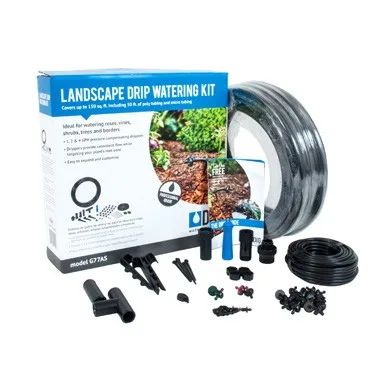
G77AS is made for landscape planting. DIG lists a faucet connection, filter, pressure regulation, distribution tubing, and point-source emitters on the product page. Flower beds sit inside its listed compatibility with shrubs, trees, and mixed plantings.
The tradeoff is missing coverage detail. The record does not state a square-foot limit, so you need to map the bed and count the delivery points yourself. That is fine for an irregular border and less useful when you need a firm area estimate.
Pros: Point emitters; landscape fit; filter and pressure regulation; flexible route.
Cons: Coverage is not stated; exact warranty and stock are not stated; requires more measuring.
Check the current DIG G77AS listing
Other flower-bed options
DIG GD50
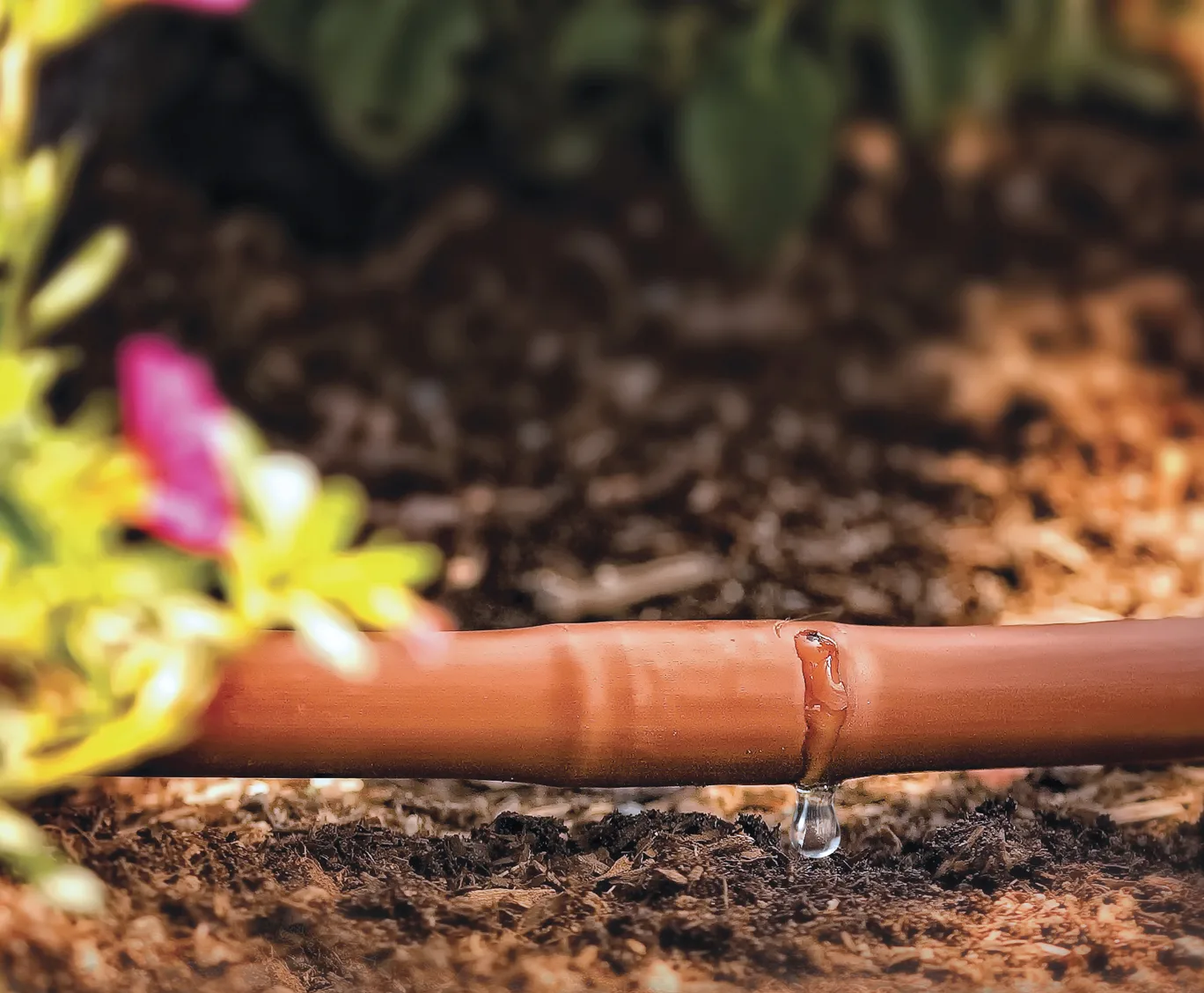
GD50 is the middle ground for a border with repeated planting. DIG describes it as a pressure-compensating dripline kit for landscape beds and shrub borders on the manufacturer page. The locked record does not state exact coverage or emitter spacing.
It is a reasonable fit when the border has a continuous line of plants. It gives you less freedom than point emitters when plants are scattered.
Pros: Pressure-compensating dripline; landscape-bed focus; useful for repeated borders.
Cons: Coverage and spacing are not stated; less adaptable than point emitters; exact stock is not stated.
Check the current DIG GD50 listing
DIG SM50
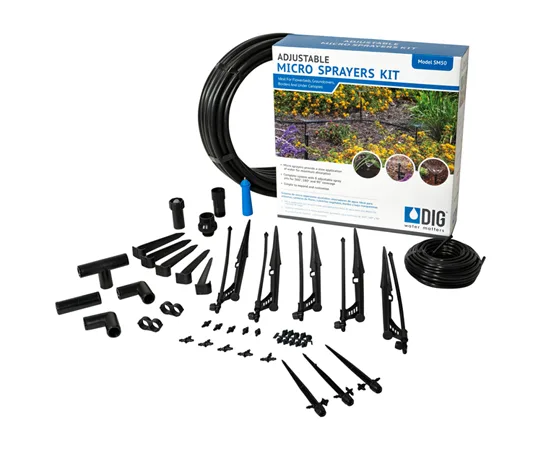
SM50 suits a small flower pocket where an adjustable spray pattern covers the group. DIG lists small beds, greenhouse benches, and landscape pockets as compatible uses on the product page. Coverage and included-part count are not stated.
Use it where a patch pattern fits. If leaves should stay dry or each plant sits far from its neighbor, point emitters are easier to control.
Pros: Adjustable spray; small-area focus; useful for pockets.
Cons: Coverage is not stated; may wet foliage; less precise than individual emitters.
Check the current DIG SM50 listing
DIG SM500
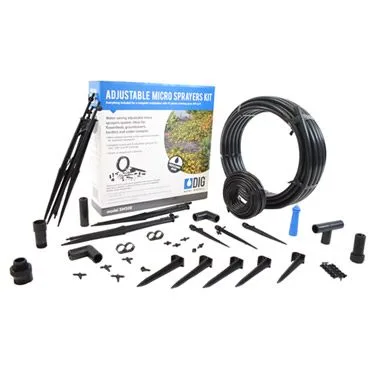
SM500 is the broader spray choice for beds, shrubs, and trees. DIG lists those uses and greenhouse areas on the SM500 page. The source record does not state coverage or included-part count.
Its pattern can suit a broad border, but spray is more exposed to wind and evaporation than dripline. Keep that tradeoff in mind on an open site.
Pros: Broader landscape use; adjustable micro-spray; can cover a planting patch.
Cons: Coverage is not stated; spray may drift; less targeted than dripline.
Check the current DIG SM500 listing
Rain Bird
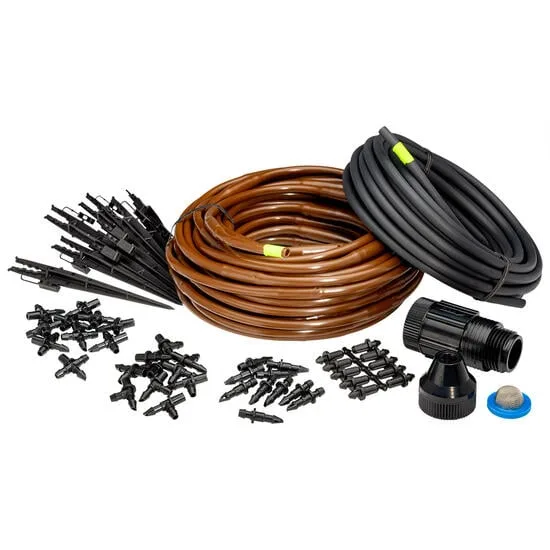
Rain Bird is for a neat, standard bed rather than a winding border. Its product page lists a 4-by-8-foot layout, 35 feet of 1/4-inch emitter tubing with 6-inch spacing, 25 feet of distribution tubing, a 25 PSI regulator, and a 150-mesh filter.
That clarity is useful when the bed matches the dimensions. A mixed border outside that shape will likely need a landscape kit.
Pros: Defined bed layout; close emitter spacing; filter and regulator included.
Cons: Fixed format; less useful for winding borders; timer is an added compatible part.
Check the current Rain Bird listing
DIG ML50
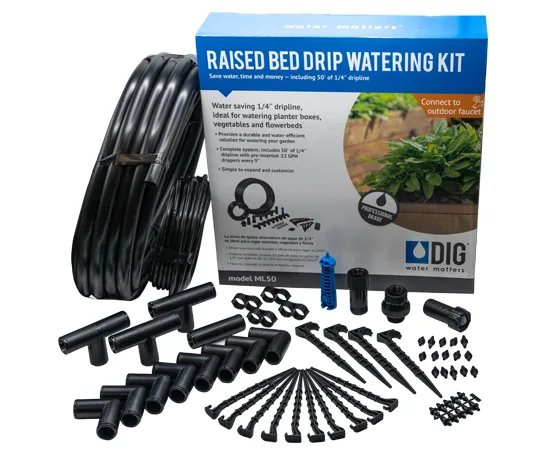
ML50 is useful for a defined flower bed with several short lines. DIG lists five 10-foot lines, 9-inch emitter spacing, up to 150 square feet, and expansion beyond 700 square feet on the model page. It includes a 25 PSI regulator, filter, backflow preventer, and supply tubing.
The bed-specific layout is easier to start than a blank tubing plan. It is less comfortable around a long irregular border.
Pros: Five short lines; documented spacing and area; pressure parts included; expansion path.
Cons: Small starting footprint; bed-focused; not a broad spray or landscape layout.
Check the current DIG ML50 listing
How to choose for a flower bed
Map the bed’s edge and mark the plants that need separate delivery. G77AS and GE200 give more freedom for irregular plantings. GD50 suits repeated lines. Rain Bird and ML50 make more sense when the bed has a defined shape.
Choose spray only where it serves a clear patch. Flowers with different heights and water needs may be easier to manage with point emitters. A filter and pressure regulator help the system match the source, but neither chooses the right plant placement for you.
Measure from the faucet and leave a route that can be inspected. For supply-hose reach, see the large-garden hose guide. For a smaller bed, compare the raised-bed irrigation guide.
Frequently asked questions
What is the best irrigation system for flower beds?
DIG GE200 is the broadest fit in this list because it combines emitters and micro-sprayers. G77AS is better when you want point-source emitters in an irregular landscape border.
Is drip irrigation better than a sprinkler for flowers?
Drip emitters place water at individual delivery points. Micro-sprayers cover a patch but may wet foliage and lose more water in wind. Choose according to bed shape and plant spacing.
Can one kit handle a winding flower border?
G77AS is the most directly landscape-oriented option here. Its exact coverage is not stated, so map the border and verify the amount of tubing and emitter placement before buying.
Do flower beds need a pressure regulator?
Several kits here list pressure regulation, including GE200, G77AS, Rain Bird, and ML50. Follow the product instructions and confirm the source before connecting the layout.
Recommendation
Choose GE200 for a mixed flower bed, G77AS for point-source control in an irregular border, GD50 for repeated lines, and Rain Bird or ML50 for a defined bed.
Sources and methodology
Product facts came from locked pages for DIG GE200, G77AS, GD50, SM50, SM500, Rain Bird, and ML50. She Gardens did not test these products. The ranking follows the locked irrigation manifest dated 29 August 2026.