
Buying guide
Best leaf blowers for artificial grass: 7 picks with low-speed control
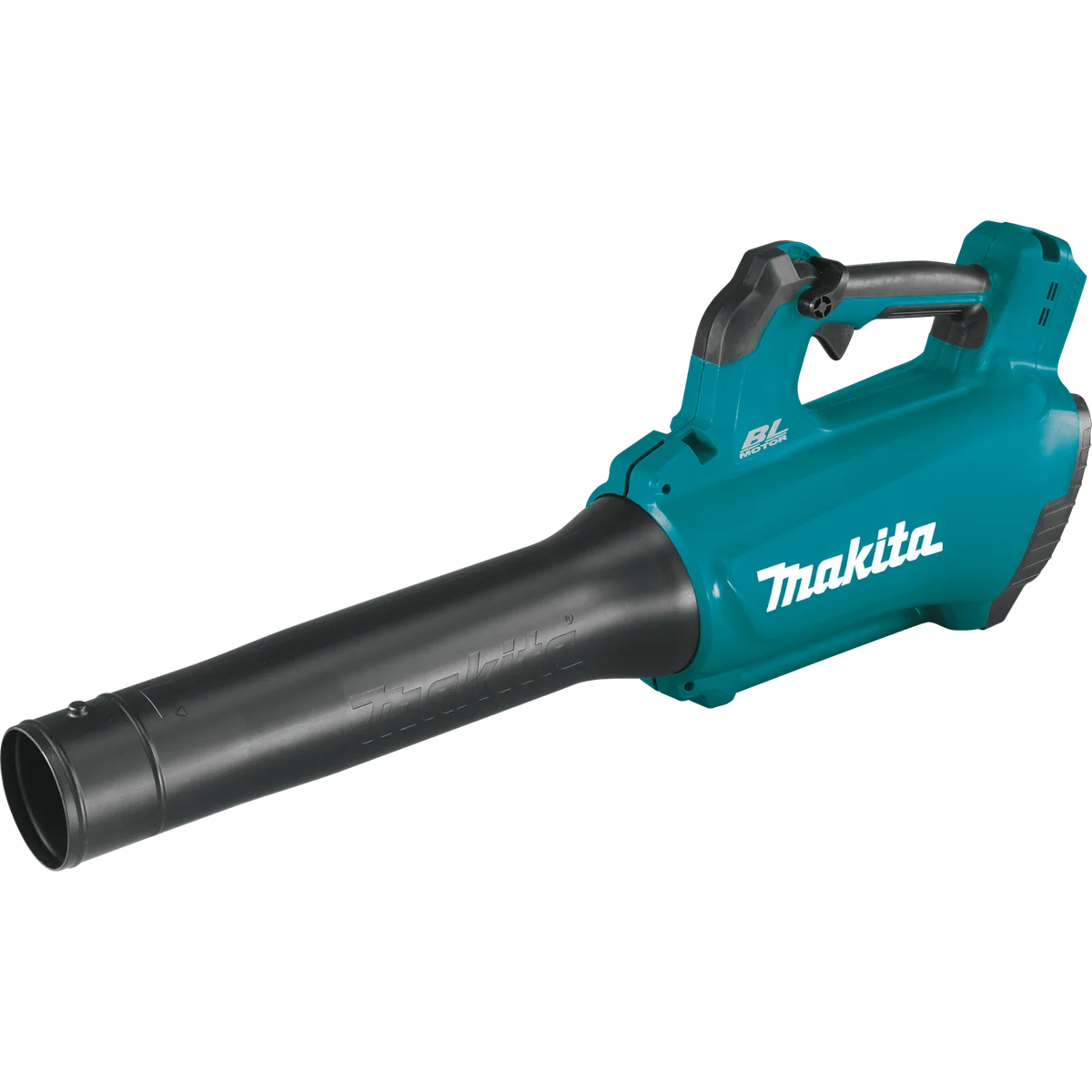
Makita XBU03Z is the best starting point for artificial-grass cleanup because it has documented low-output control and the clearest battery-equipped weight. No manufacturer claim in the locked pool says a blower is safe for every artificial-grass surface.
Quick answer
Artificial grass needs a careful cleanup approach because the surface, infill, seams, and nearby edging vary by installation. The Makita XBU03Z is the best documented starting point in this pool. It weighs 4.6 pounds bare and 6.0 pounds with a battery, has 459 CFM and 116 MPH maximum in the checked material, and uses a cruise-control lever. That gives you a clear way to begin with less output.
The locked sources do not give a manufacturer artificial-turf rating for any model. She Gardens did not test synthetic grass, infill displacement, seam wear, or heat. Start on a small hidden area, follow the turf installer’s care instructions, and keep the stream away from seams, loose infill, people, pets, and nearby property. More CFM is not automatically better, and MPH alone is not a performance measure.
| Rank | Product | Best fit | Main drawback |
|---|---|---|---|
| 1 | Makita XBU03Z | Light carry and controlled output | Lower airflow tier |
| 2 | Milwaukee M18 FUEL 2724-20 | M18 low setting | 7.4 lb catalog figure |
| 3 | Husqvarna 230iB | Variable speed and round nozzle | Battery weight separate |
| 4 | EGO POWER+ LB6504 | Broad cleanup with control | Kit weight unknown |
| 5 | EGO POWER+ LB7654 | Large debris area | High output can be too much |
| 6 | EGO POWER+ LB6703 | Current 56V platform | Weight and runtime unknown |
| 7 | RYOBI 40V HP Brushless Whisper Series RY404100 | Long route with variable control | Dual-battery weight unknown |
The seven artificial-grass picks
1. Makita XBU03Z
Makita XBU03Z leads because the research gives you a complete comparison point. It is 4.6 pounds bare and 6.0 pounds with a battery, with 459 CFM, 116 MPH maximum, and a cruise-control lever. The manual also reports a 96 MPH average figure. A cruise lever lets you hold a modest stream while you watch the surface instead of squeezing toward maximum output.
Makita lists XPT resistance, Star Protection, and a 60 dB(A) catalog sound-pressure figure. None of those details is an artificial-grass approval. Confirm the installer’s care instructions and keep the nozzle moving rather than concentrating air at a seam.
Pros: 6.0 lb with battery, cruise control, and lower airflow. Cons: No artificial-grass claim.
2. Milwaukee M18 FUEL 2724-20
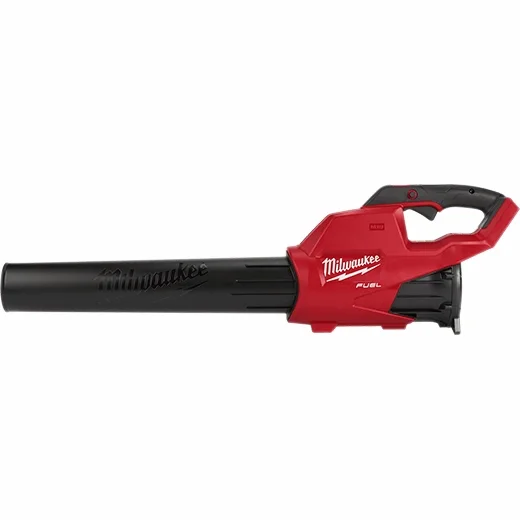
Milwaukee’s M18 FUEL 2724-20 has high and low settings, a variable trigger, and a lock-on button. Its locked figures are 450 CFM and 120 MPH, with a 7.4-pound manufacturer-catalog weight. Check the battery status behind that weight. Milwaukee describes low setting use for beds where mulch should stay put, which is useful control context even though it is not a synthetic-turf claim.
This is a platform pick for existing M18 owners. Start low on a small inconspicuous area. If infill moves, stop and use the care method supplied with the turf.
Check the Milwaukee M18 FUEL 2724-20
Pros: Low setting, variable trigger, and M18 fit. Cons: 7.4 lb catalog figure and no turf claim.
3. Husqvarna 230iB
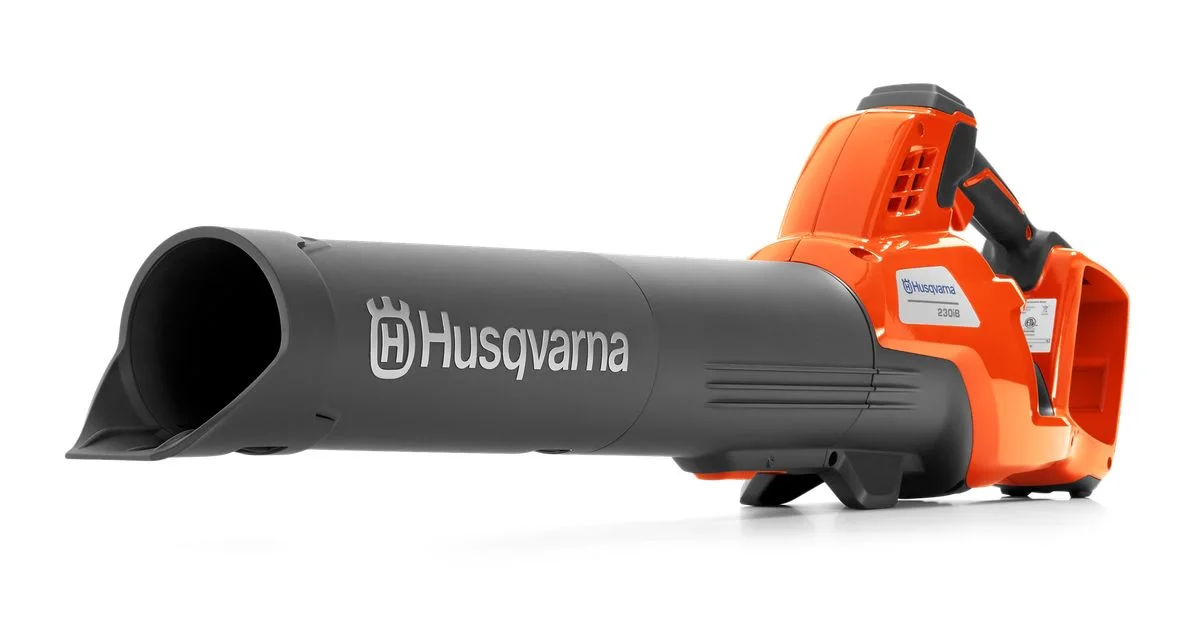
Husqvarna 230iB has variable speed, boost, and a round nozzle. The checked product material lists 650 CFM and 139.81 MPH, while a manual variant reports 136 MPH. The tool weighs 5.8 pounds excluding the battery. Those controls give you room to reduce output, but they do not prove the tool will leave every artificial-grass system unchanged.
The model has a debris scraper, which should not be used as a reason to scrape turf or infill. Follow the turf manufacturer’s instructions and confirm the complete battery weight.
Pros: Variable speed, 650 CFM, and documented tool weight. Cons: Battery weight is separate and turf claim is absent.
4. EGO POWER+ LB6504
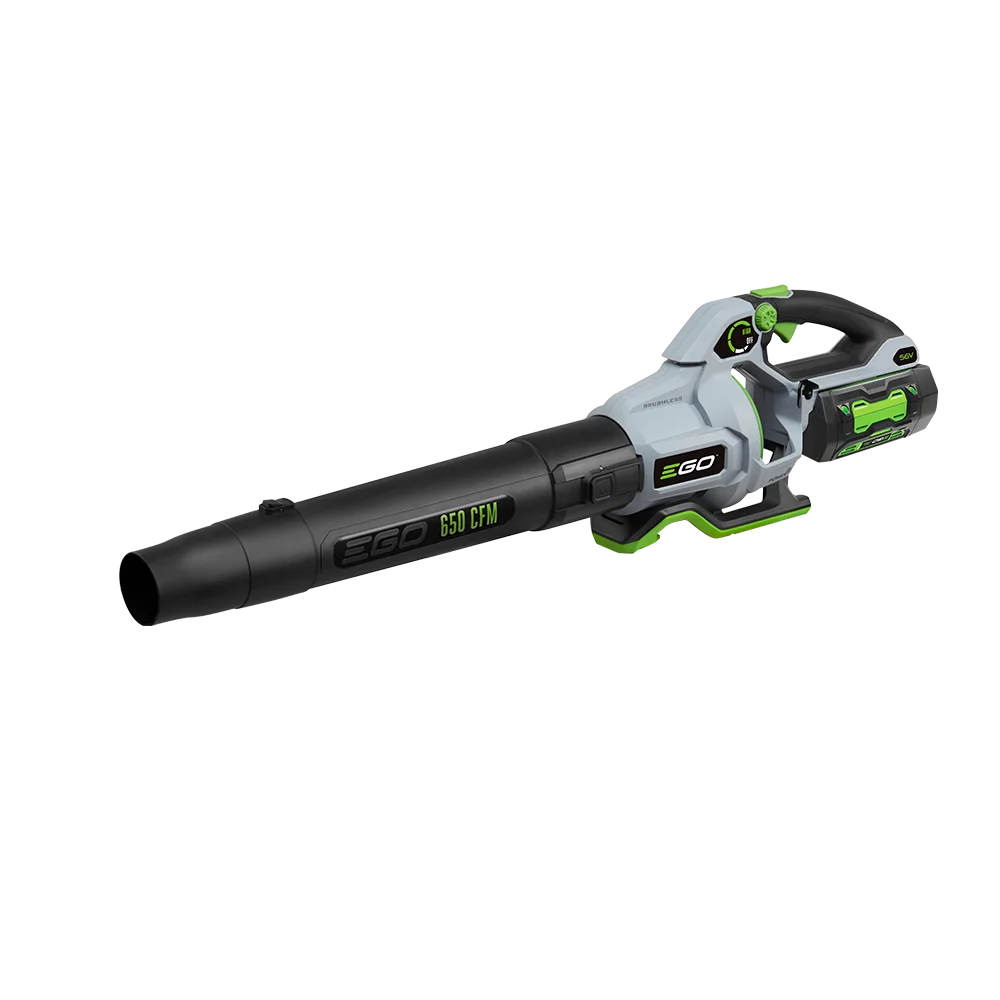
The EGO LB6504 has up to 650 CFM and 180 MPH with its tapered nozzle, plus a spread nozzle, variable trigger, and cruise control. The spread nozzle may be easier to moderate on an open section than a concentrated stream. EGO lists IPX4 resistance, but that is not a turf-care rating.
The complete kit weight is unknown in the locked source. Choose it when you already use the EGO 56V system or need its output for surrounding hardscape, then use the lowest setting that clears the debris without disturbing the surface.
Pros: Spread nozzle, variable trigger, and cruise control. Cons: Full kit weight and turf claim are unknown.
5. EGO POWER+ LB7654
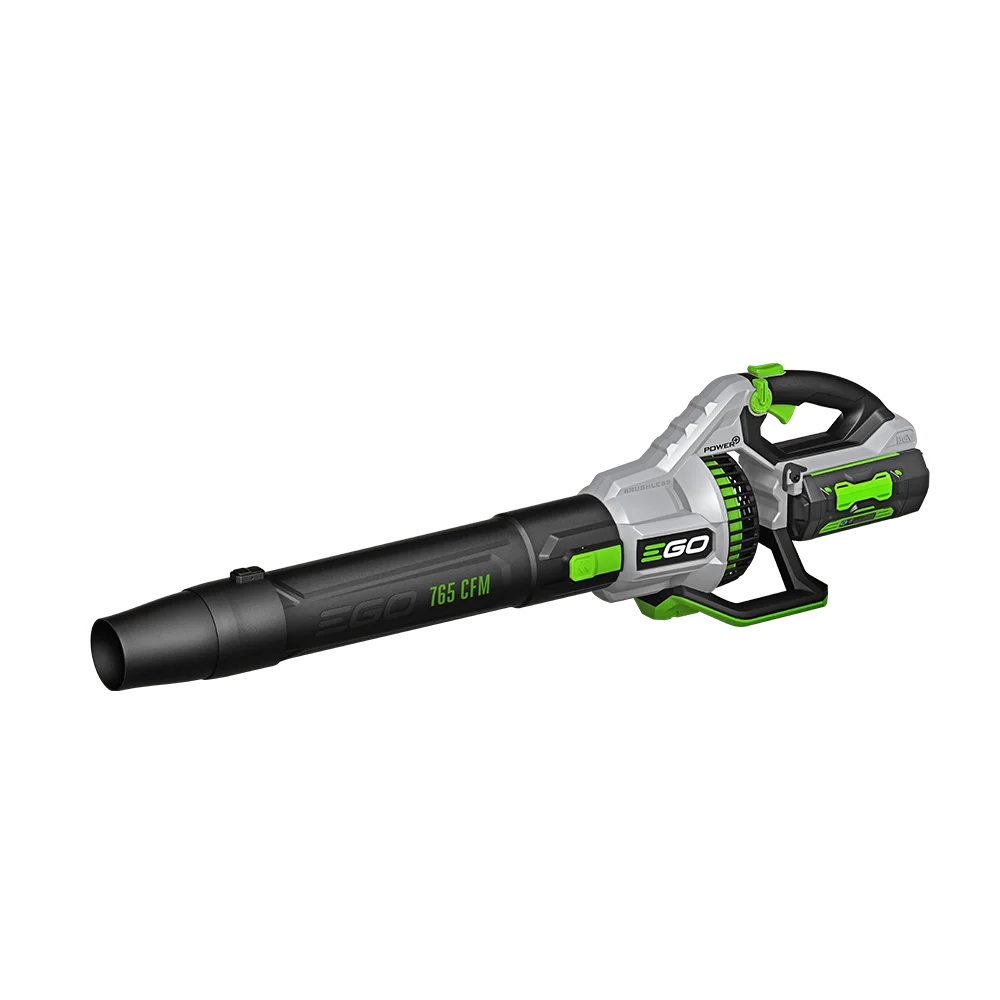
LB7654 has up to 765 CFM and 200 MPH with the tapered nozzle, along with a wide-fan nozzle, variable trigger, and cruise dial. That range can help when one job includes a patio and artificial grass, but the maximum setting may be unnecessary for the turf itself. Use the broad or lower stream first.
PTR reported 4.6 pounds bare and 9.63 pounds with a 5Ah battery. A heavier setup is harder to keep steady at a safe distance. The locked record gives no artificial-grass test and no universal surface claim.
Pros: Two nozzles, variable control, and highest airflow. Cons: Heavy setup and no turf test.
6. EGO POWER+ LB6703
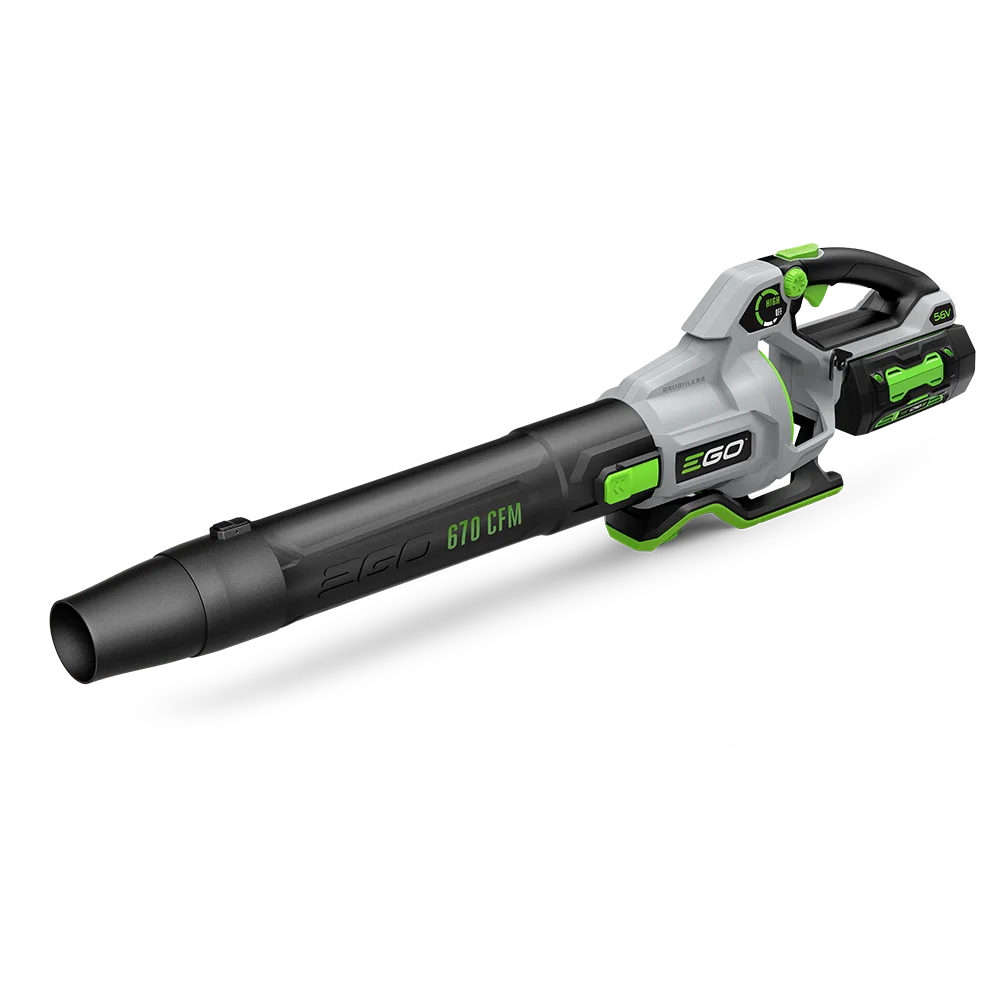
The LB6703 has up to 670 CFM in EGO’s current range and uses a tapered nozzle with variable-speed control. Current checked material does not supply MPH, weight, or runtime. It may fit an existing EGO owner, but the missing handling information makes it harder to choose for a surface where control is the main concern.
Confirm the exact model, battery, and kit. Do not apply another EGO model’s speed or weight figures to LB6703.
Pros: Up to 670 CFM and variable speed. Cons: Weight, MPH, runtime, and turf claim are not recorded.
7. RYOBI 40V HP Brushless Whisper Series RY404100
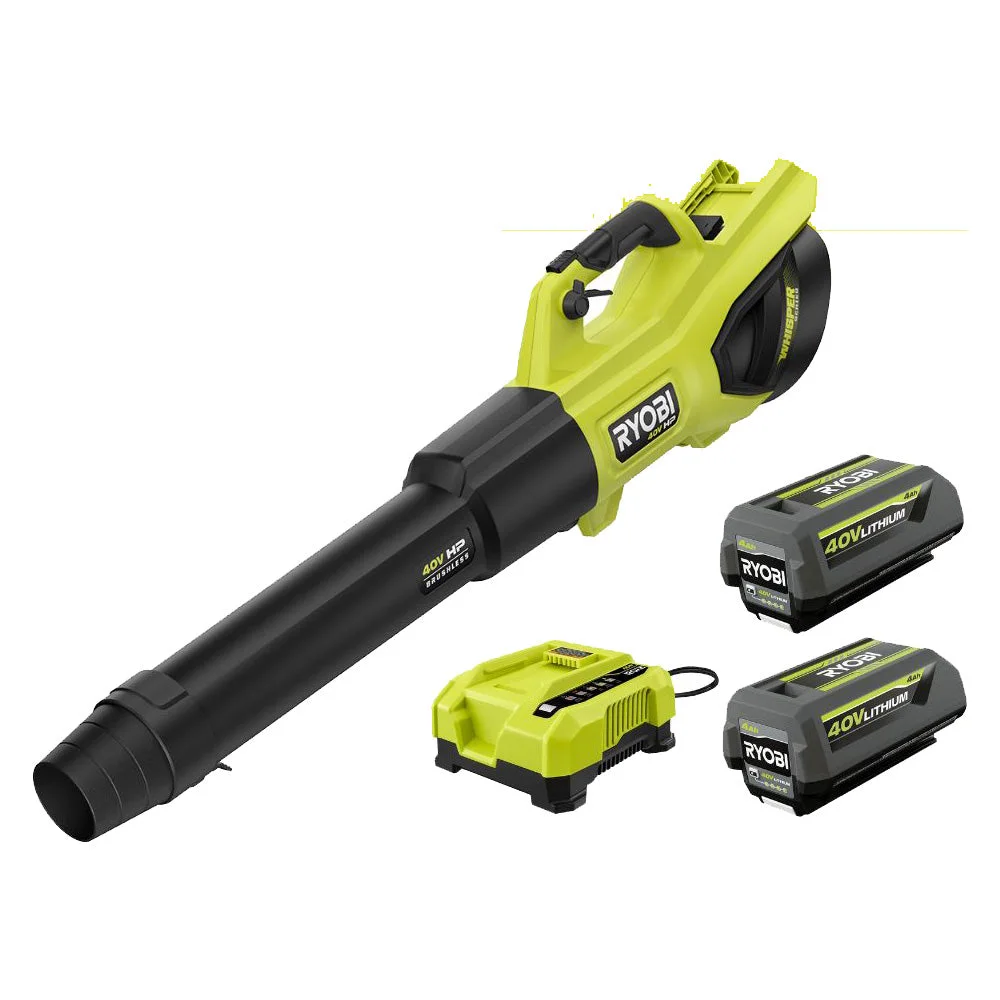
RYOBI’s RY404100 lists up to 730 CFM and 190 MPH with variable control. RYOBI states up to 2 hours using two 40V 4Ah batteries under its condition, but the complete carry weight is not verified. A long battery claim does not tell you whether the stream will disturb infill.
Use the lowest output that removes leaves and test a small area first. The Whisper Series name does not remove the need for hearing protection when the manual requires it.
Pros: Up to 730 CFM and variable control. Cons: Two-battery weight and turf effect are unknown.
How to protect artificial grass while cleaning
Read the turf installer’s maintenance instructions before choosing a blower. The locked research contains no manufacturer artificial-grass claim, so the safest recommendation is a cautious process. Clear a small test patch. Use low output. Keep the nozzle at a reasonable distance and moving. Stop if infill shifts, blades lift, seams flex, or dust travels toward people or property.
Do not aim straight down at the turf. Sweep across the surface and work leaves toward a collection point. A rake or soft brush recommended by the turf maker may be more appropriate for stuck debris. Never use a blower’s high setting as a substitute for care instructions.
The same comparison rules apply here as elsewhere. CFM describes air volume. MPH describes air speed under a stated setup. Neither gives a universal surface-safety result. Nozzle shape, trigger control, battery weight, debris, infill, seam design, and installation all matter. Wear eye and hearing protection as the manual directs.
The garden hose guide for small spaces covers storage and movement in another outdoor category. It does not establish artificial-grass care rules.
Artificial grass often sits beside planted borders. Compare the ornamental-grass hedge-trimmer guide and small-garden hedge-trimmer guide for adjacent growth.
Frequently asked questions
What is the best leaf blower for artificial grass?
Makita XBU03Z is the best documented starting point because its battery-equipped weight and cruise control are stated. No locked source says it is safe for every artificial-grass installation. Test a small area and follow the turf maker’s instructions.
Can a blower damage artificial grass?
It may disturb infill or stress a seam if the output is too high or too close. The locked pool has no universal turf-safety claim. Start low, keep the stream moving, and stop when the surface changes.
Should I use maximum CFM to remove leaves?
No. More air can move loose material, but it can also move infill or dirt. Use only the output needed for the debris, and do not treat CFM or MPH as a surface rating.
Is a blower better than a brush for artificial grass?
The answer depends on the turf maker’s care instructions and the debris. A blower may suit loose leaves, while a recommended brush may suit stuck material. This guide does not replace those instructions.
Recommendation
Start with Makita XBU03Z for the clearest weight and low-output control. Milwaukee 2724-20 is a practical M18 alternative, and Husqvarna 230iB offers more airflow with variable speed. For every model, test a hidden patch first and protect seams and infill.
Sources and methodology
She Gardens used the locked leaf-blower shortlist and source registry researched on 29 August 2026. Product facts came from Makita, Milwaukee, Husqvarna, EGO, and RYOBI. Independent context came from Pro Tool Reviews, Project Farm, Bob Vila, and the PTR EGO review. She Gardens did not test artificial grass or infill. Confirm the turf maker’s care instructions and the current blower manual before use.