
Buying guide
Best solar lights for your garden: 7 picks for paths, beds, walls, and strings
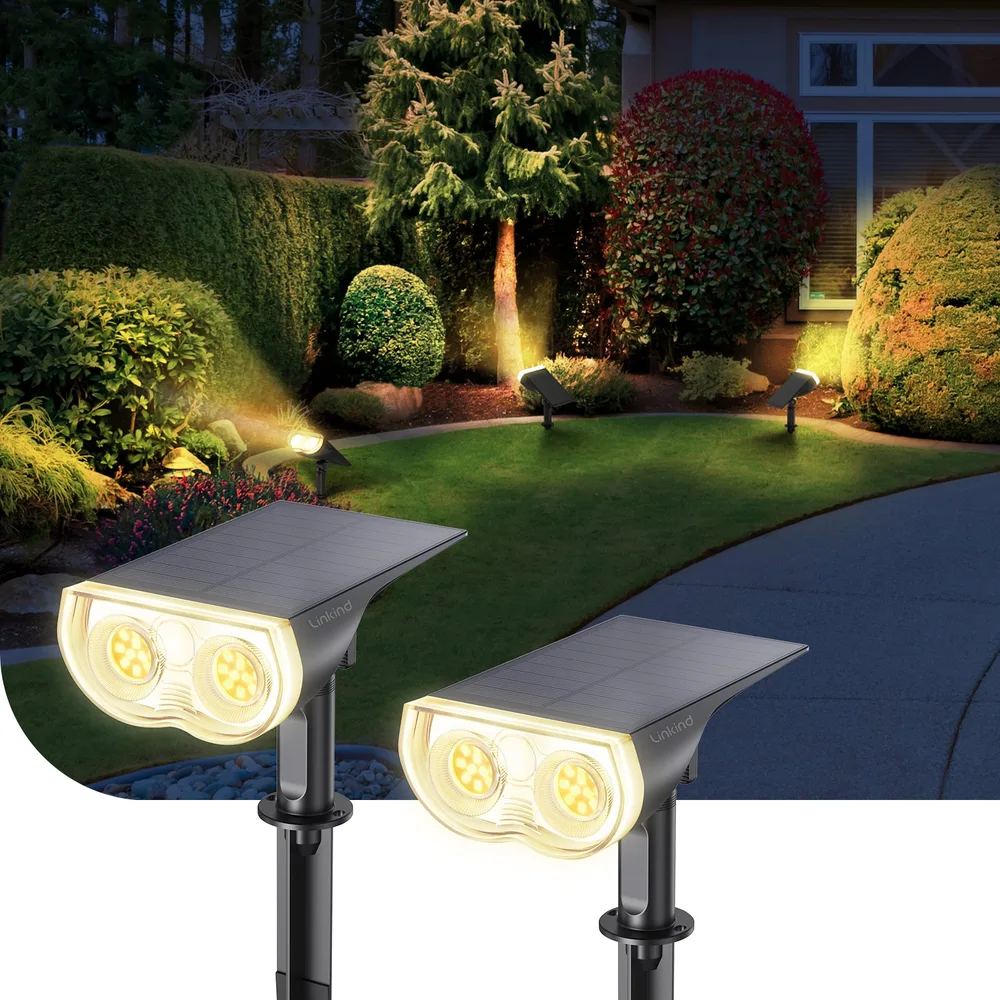
Linkind's StarRay SP001U is the strongest mixed-format starting point because its documented 650-lumen output and adjustable panel suit garden accents, walls, and larger features. The right choice still depends on whether you need a focused beam, path markers, or decorative string light.
Quick answer
For a mixed garden setup, start with the Linkind StarRay Solar Spotlight SP001U. The manufacturer lists 650 lm, low, medium, and high runtime claims of 24, 12, and 6 hours, plus a panel that adjusts vertically and horizontally. It can sit on a ground stake or mount on a wall, so it covers more garden jobs than a fixed path light.
That flexibility comes with a focused spotlight format. A path light marks a walkway, while a string light draws a line across a fence or seating area. This guide keeps those jobs separate. She Gardens did not test these lights. The runtime and weather details come from manufacturer documentation. Check the current listing before buying.
| Rank | Product | Best fit | Main drawback |
|---|---|---|---|
| 1 | Linkind StarRay Solar Spotlight SP001U | Bright garden feature or wall accent | Battery capacity is not disclosed |
| 2 | Linkind StarRayS Solar Spotlight SP002 | Smaller garden feature | Lower output than SP001U |
| 3 | Nanoleaf Solar Garden Lights 2-Pack | Path, flowerbed, fence, or accent use | Estimated 4 to 8 hour runtime |
| 4 | Feit Electric OneSync 12 in Bronze Solar Pathway Light PATH/SYNC/SOL/BZ/RP | Coordinated path lighting | 40 lm per light |
| 5 | Govee Outdoor Solar String Lights H3001 | App-style string lighting | 13-hour claim is at 10 lm |
| 6 | Hoselink Warm White Solar Party Bulb String Lights USL460 | Warm white bulbs over 26 ft | Battery is not replaceable |
| 7 | Feit Electric SL20-10/SOL/V1 20 ft Solar String Lights | Shorter string installations | Lumens are not disclosed |
The seven garden-light picks
1. Linkind StarRay SP001U
The SP001U manufacturer page documents 650 lm and three settings. Linkind lists 24 hours on low, 12 hours on medium, and 6 hours on high. The head adjusts, and the panel has 90 degrees of vertical and 180 degrees of horizontal adjustment. That makes it a sensible first look for a tree, raised bed, fence, or garden wall where you need to aim the light rather than spread it evenly.
The product uses a ground stake or wall mount. Its IP65 rating and the manufacturer’s “drizzle-proof” wording do not establish submersion tolerance or a general waterproof promise. Battery chemistry and capacity are not disclosed on the reviewed page.
Check the Linkind StarRay SP001U
Pros: Highest documented output in this pool, adjustable aiming, and two mounting options. Cons: Battery details are missing, and it is a spotlight rather than a path or string system.
2. Linkind StarRayS SP002
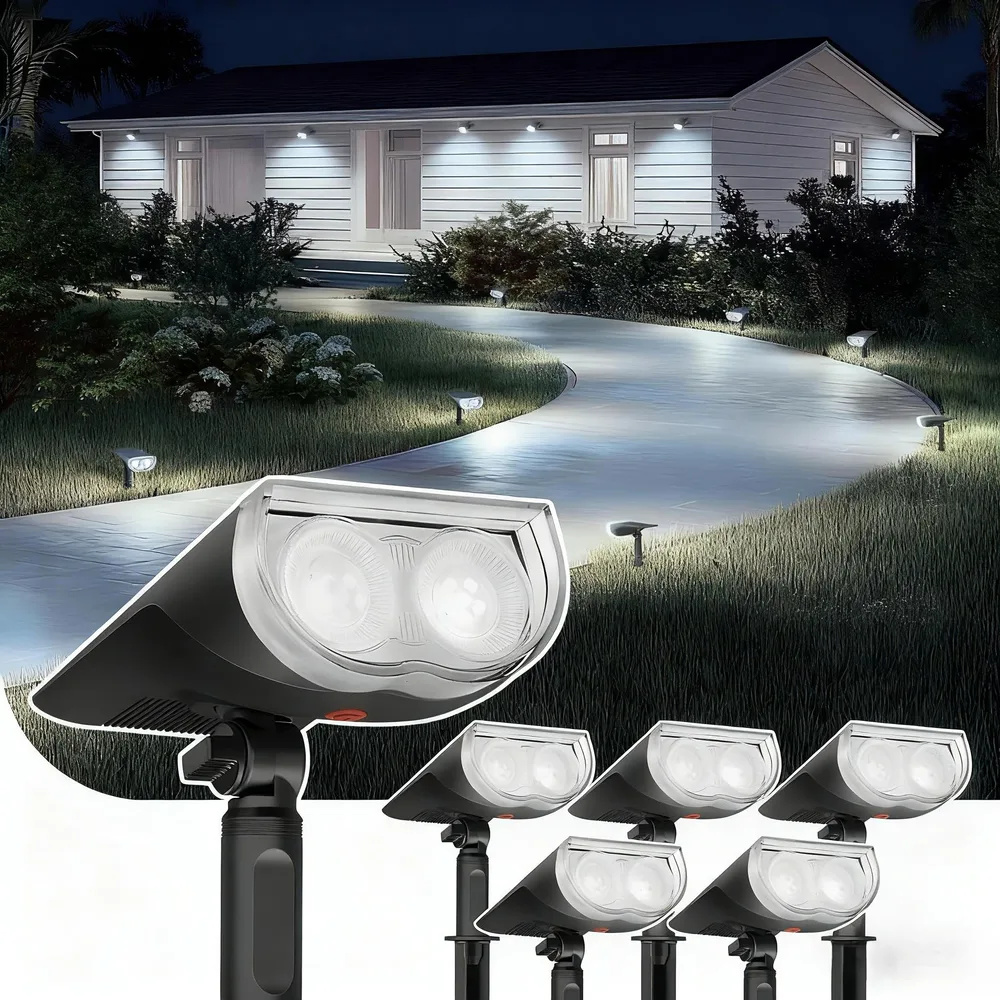
The SP002 manufacturer page lists 350 lm, with a low-setting runtime of 12 hours and a high-setting runtime of 6 hours. The head and panel adjust in two directions, and you can use the unit on a ground stake or wall mount. It fits a smaller feature where you want a focused beam but do not need SP001U’s higher documented output.
Linkind’s page lists IP67 in its comparison table and FAQ, while the title and feature list say IP65. Confirm the rating on the exact pack and manual rather than buying on a submersion claim. Battery chemistry and capacity are also undisclosed.
Check the Linkind StarRayS SP002
Pros: Adjustable spot format, wall or ground placement, and two brightness modes. Cons: 350 lm is lower than SP001U, and the runtime conditions are limited to two settings.
3. Nanoleaf Solar Garden Lights
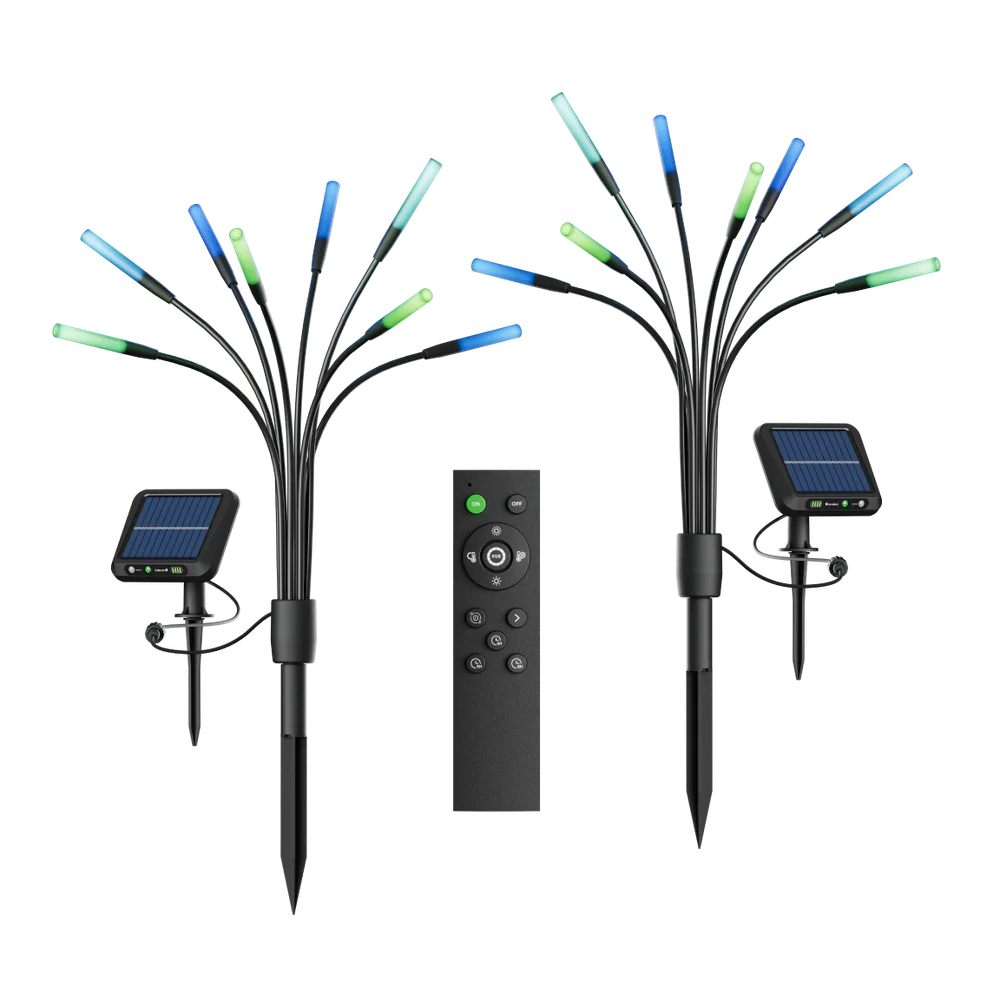
The Nanoleaf Solar Garden Lights are the most flexible small-format choice here. The manufacturer lists 50 lm per light, an estimated 4 to 8 hours, RGBW lighting, and a 1,200 mAh 18650 lithium battery. Solar charging has USB-C backup, which gives you another way to put charge into the lights when the panel has had a poor day.
Nanoleaf lists path, flowerbed, fence, and garden-accent placement. The record gives IP65 and an outdoor range of -25 C to 45 C. The 50-lm-per-light figure suits accents, not a task light near steps.
Check the Nanoleaf Solar Garden Lights
Pros: Two placement styles, USB-C backup charging, and a documented battery capacity. Cons: Shorter estimated runtime and lower output than the spotlights.
4. Feit Electric OneSync pathway light
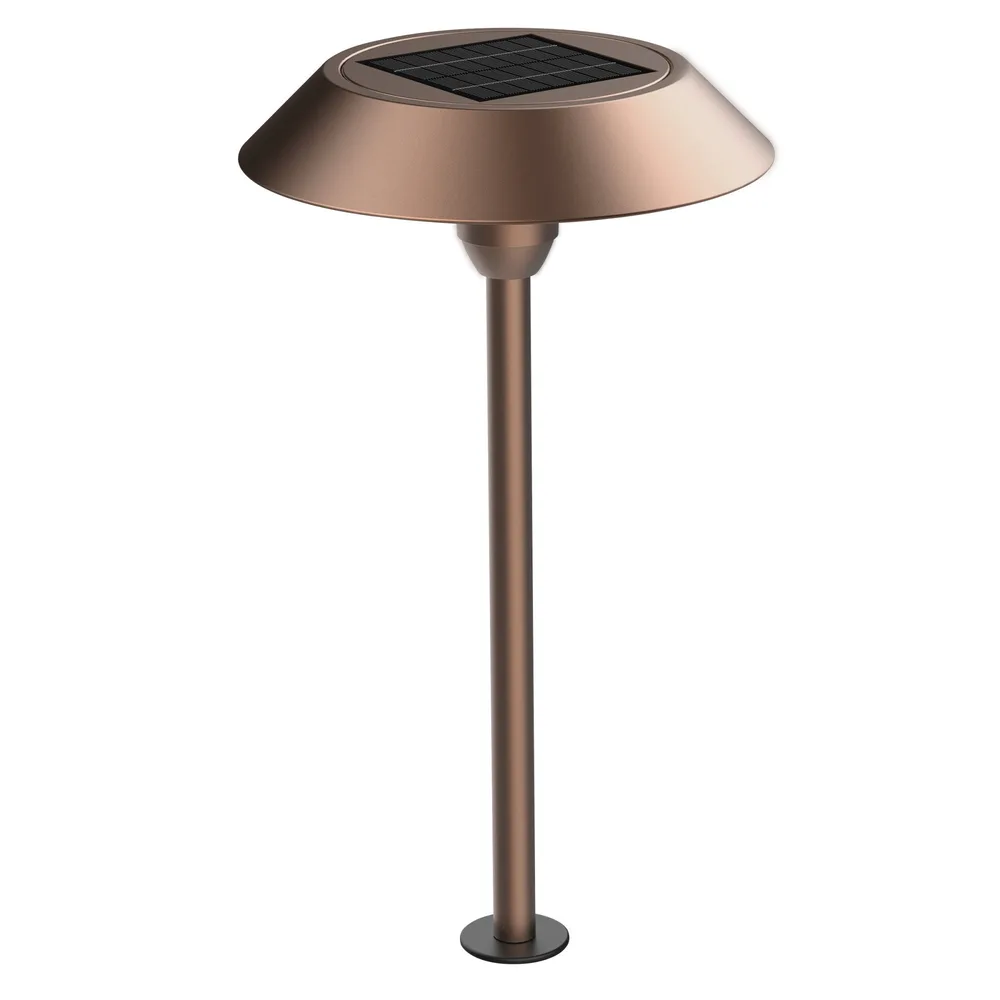
The Feit Electric OneSync PATH/SYNC/SOL/BZ/RP is the path-format pick in this mixed list. Feit lists 40 lm per light and up to 8 hours from dusk to dawn. It uses an integrated panel and a removable 18650 lithium-ion battery, and the light works with the OneSync system.
The source calls it wet-location rated but gives no IP code or submersion limit. Its removable battery is useful.
Check the Feit OneSync pathway light
Pros: Purpose-built path shape, removable battery, and system compatibility. Cons: 40 lm per light is not a feature-lighting figure.
5. Govee H3001
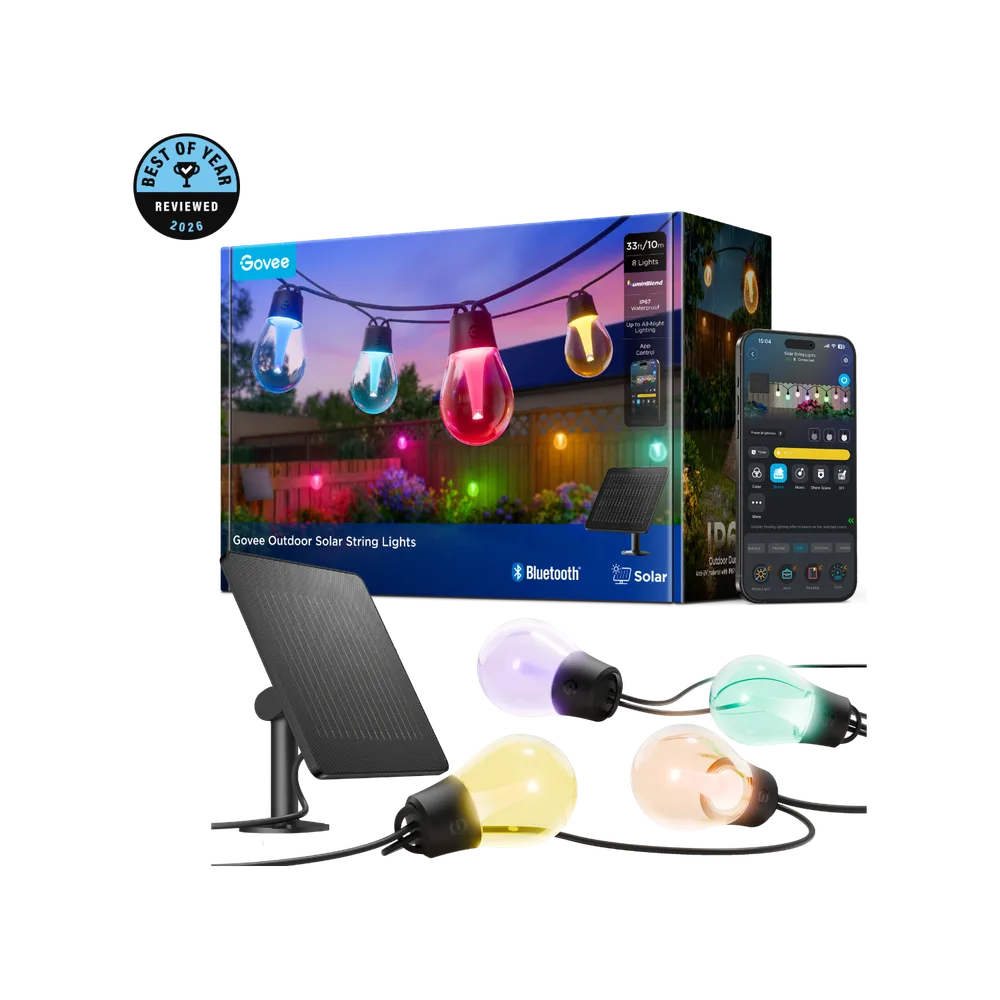
The Govee H3001 brings string lighting into the mixed ranking. Govee lists up to 50 lm per bulb at full brightness and up to 13 hours at 10 lm. The record also names a 6 W solar panel with an ETFE surface and an IP67 rating. The panel needs direct sun, so its location matters as much as the string’s final mounting point.
The full-brightness and 10-lm figures describe different settings, so 13 hours is not a full-output promise. Govee gives a panel temperature range of -4 F to 104 F; IP67 remains an ingress rating.
Pros: String format, 50-lm-per-bulb maximum, and the clearest conditional runtime. Cons: Direct sun is required for the panel, and low brightness is the stated 13-hour condition.
6. Hoselink USL460
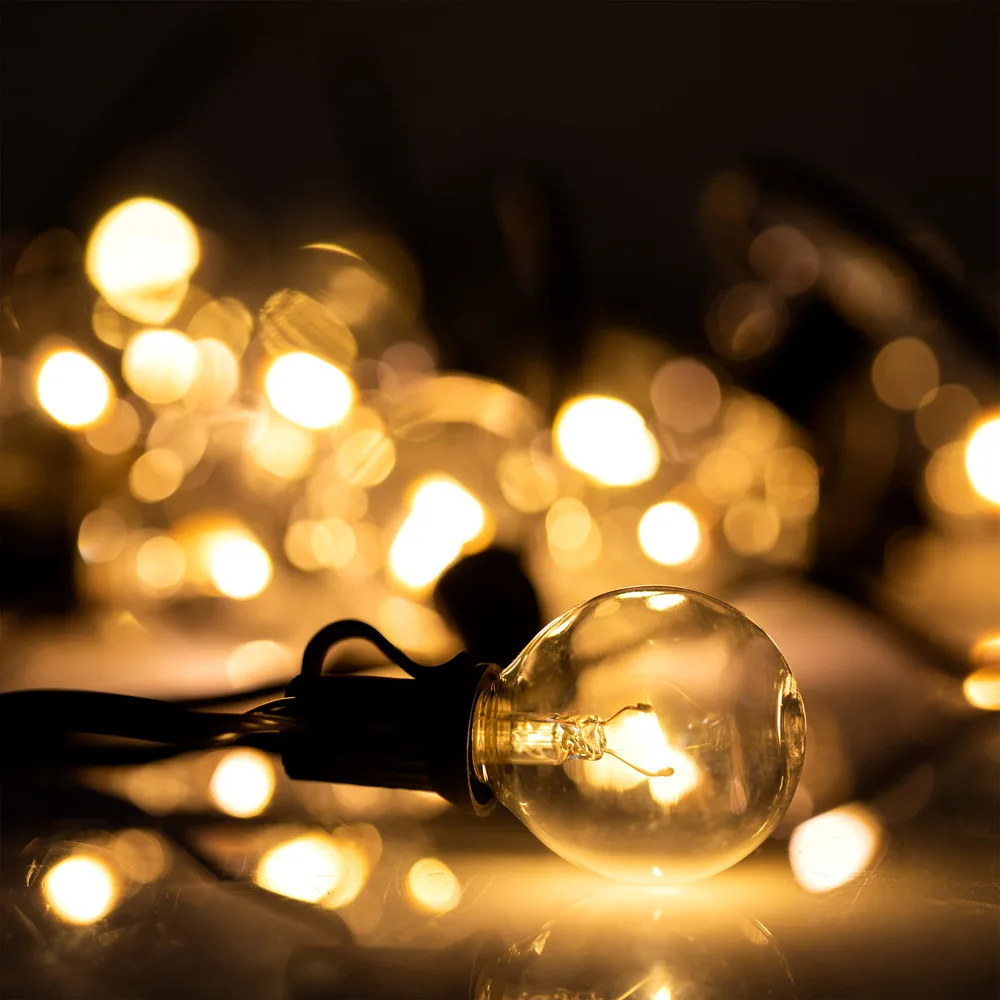
The Hoselink USL460 gives you a classic bulb line for a pergola, fence, or sitting area. Hoselink lists 240 lm total, 8 to 12 hours depending on light mode, a 26-ft string with 25 bulbs, and a 5 V / 3 W solar panel that needs direct sun. Its 3.7 V / 2,200 mAh lithium-ion battery is non-replaceable.
IP65 is the documented weather detail. The warm white format fits a decorative seating area better than a directional feature beam.
Pros: Clear string length, bulb count, output, and runtime range. Cons: The battery cannot be replaced.
7. Feit Electric SL20-10/SOL/V1
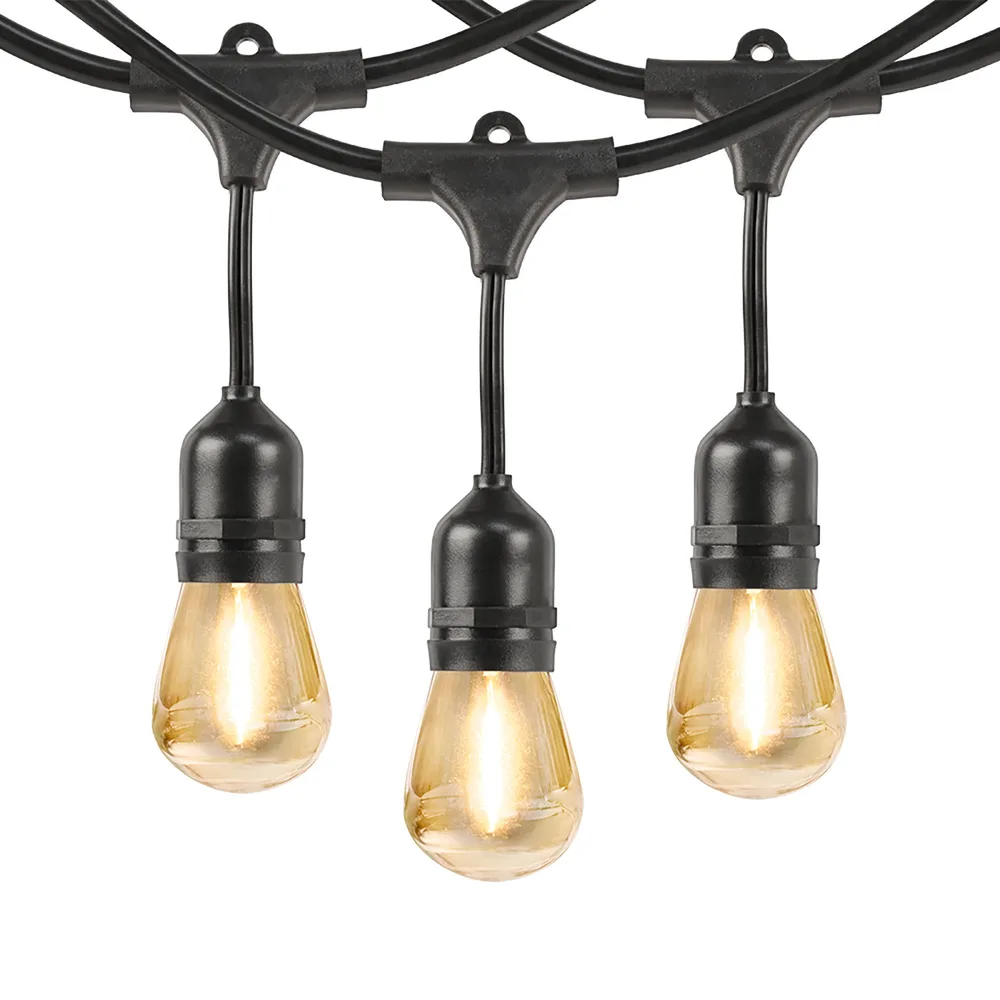
The Feit SL20-10/SOL/V1 is a shorter string for a small fence section or garden nook. Feit lists up to 6 hours, with a timer that activates the lights for 6 hours after dusk. The 20-ft string uses a dedicated panel that can be staked or wall mounted, and Feit recommends at least 6 hours of direct sun. The set has two embedded 18650 lithium-ion rechargeable batteries and shatter-resistant bulbs.
The source gives UL Wet Location approval but no IP code or lumen figure. Shade can reduce charging and working hours, so do not hide the panel under the same canopy as the bulbs.
Check the Feit SL20 solar string lights
Pros: Short format, clear panel placement, and two rechargeable batteries. Cons: No lumen figure and a shorter documented runtime.
For a tree or wall that needs an aimed beam, compare the garden spotlight picks.
How to choose solar lights for a garden
Start with the shape of the job. Use a spotlight for a tree, sculpture, wall, or other feature that needs an aimed beam. Use a path light to mark a route. Use a wall or step light where mounting height and motion matter. Use a string light to connect a fence, pergola, or seating area. The garden hose guide for large gardens covers another long-distance setup. For a smaller layout, see the small-space hose guide.
Then look at the panel. Direct sun is an explicit requirement for Govee, Hoselink, and Feit SL20. A panel under leaves or against a shaded wall may collect less charge than the runtime claim assumes. Runtime also changes with brightness and light mode. Govee’s 13-hour figure is at 10 lm, while Hoselink gives an 8 to 12 hour range depending on mode. Those are useful planning figures, not guarantees for every night.
Compare lumens within the same format. A 650-lm spotlight and a 40-lm path light solve different problems. IP65, IP66, and IP67 are documented ingress codes. Wet-location approval and manufacturer weather wording are narrower than a waterproof promise.
Check the package, mount, battery, and retailer listing. The panel still needs usable daylight.
Frequently asked questions
Which solar light is best for a garden feature?
Linkind SP001U ranks first for its 650-lm output, adjustable head and panel, and ground or wall mounting. It is a focused spotlight, so choose a path or string format for those jobs.
Do solar lights work in shade?
The manufacturer pages do not promise a fixed runtime in shade. Feit says shade can reduce charge and working hours, while Govee and Hoselink tie claims to direct-sun placement.
Is IP67 the same as waterproof?
No. IP codes describe documented ingress resistance. For SP002 and Govee, the sources do not establish every submersion condition or a blanket waterproof claim.
Are solar string lights bright enough for a garden path?
Strings can mark an edge or seating area. Choose a purpose-built path light for route marking.
Recommendation
Choose Linkind SP001U for a bright, aimable feature. Pick Nanoleaf for smaller accents, Feit OneSync for path markers, or Hoselink for warm white bulbs. Match the format to the job and treat runtime as conditional.
Sources and methodology
She Gardens used the solar-light shortlist researched on 29 August 2026 and rechecked manufacturer pages on 12 October 2026. Model facts came from Linkind SP001U, Linkind SP002, Nanoleaf, Feit OneSync, Govee, Hoselink, and Feit SL20. Category context came from Consumer Reports outdoor lighting. She Gardens did not test these lights or verify current stock, pack variants, or image permissions.