
Buying guide
Best organic pest control for a garden: 7 label-led options
Bonide Captain Jack's Dead Bug Brew is the clearest ready-to-use starting point in this locked pool. Neem, soap, spinosad, and horticultural oil products each have different label targets, crops, and application limits.
Quick answer
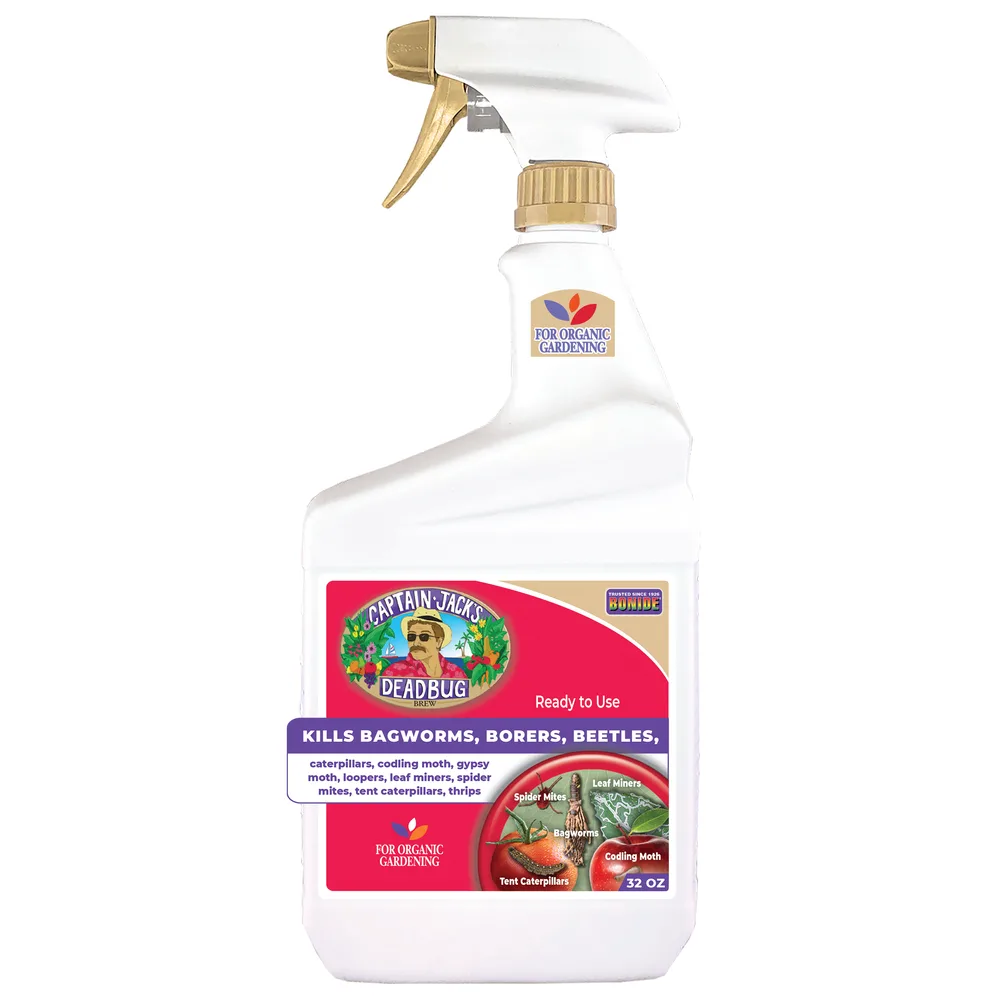
Bonide Captain Jack’s Dead Bug Brew Ready-to-Use is the clearest starting point in this locked pool when a ready-to-use garden spray fits the labeled pest and crop. The record lists spinosad at 0.001% and outdoor residential vegetables, fruits, ornamentals, plus lawns among the labeled sites. Bonide uses organic-gardening language for the product family. That language does not approve the product for every crop or change its label directions.
Bonide Neem Oil Ready-to-Use and Neem Oil Concentrate offer different neem formats. Bonide Insecticidal Soap is aimed at soft-bodied insects and mites. Monterey Garden Insect Spray uses a spinosad concentrate, Monterey RTU uses a ready-to-use mix, and Monterey Horticultural Oil is a mineral-oil concentrate. The active ingredient and label site matter more than the front-of-bottle category wording.
The Oregon State University Extension source in the locked research explains why natural and organic terminology has limits in home gardening. A product can use organic-gardening language and still require careful reading of its target and crop. It also requires reading the pollinator, weather, dilution, drying, and re-entry directions. Registration, allowed uses, and state availability vary by jurisdiction.
She Gardens did not spray plants, identify pests, test crop response, assess pollinators, or measure control or duration. Product facts below come from the locked manufacturer and regulator records dated 29 August 2026. Use the current product label. Never use the word organic as a substitute for reading the label.
| Rank | Product | Best fit | Main drawback |
|---|---|---|---|
| 1 | Bonide Captain Jack’s Dead Bug Brew Ready-to-Use | Ready-to-use labeled garden spray | Crop and pollinator directions |
| 2 | Bonide Neem Oil Ready-to-Use | Ready-to-use neem format | Crop and pest limits |
| 3 | Bonide Neem Oil Concentrate | Concentrate for labeled garden sites | Exact dilution required |
| 4 | Bonide Insecticidal Soap Ready-to-Use | Soft-bodied pests and mites | Narrower target scope |
| 5 | Monterey Garden Insect Spray | Spinosad concentrate | Dilution and pollinator rules |
| 6 | Monterey Garden Insect Spray Ready-to-Use | Ready-to-use garden sites | Crop-specific directions |
| 7 | Monterey Horticultural Oil | Mineral-oil concentrate | Plant, weather, and dilution limits |
The seven garden picks
1. Bonide Captain Jack’s Dead Bug Brew RTU
Captain Jack’s Dead Bug Brew is the top ready-to-use pick because its locked site record includes vegetables, fruits, ornamentals, plus lawns. It lists spinosad at 0.001%, with insects named on the current label as targets. The product family uses organic-gardening language, which describes a marketing or gardening category context. It does not change the product’s label obligations.
Read the Bonide product page, Bonide label, and EPA registration 4-472. Crop and pollinator directions, plus drying and re-entry rules, come from the current label.
Pros: Ready-to-use format; vegetables, fruits, ornamentals, and lawns are in the recorded site set. The active ingredient is documented.
Cons: Target and crop directions remain specific; organic-gardening language does not change the label.
Check Captain Jack's Dead Bug Brew
2. Bonide Neem Oil Ready-to-Use
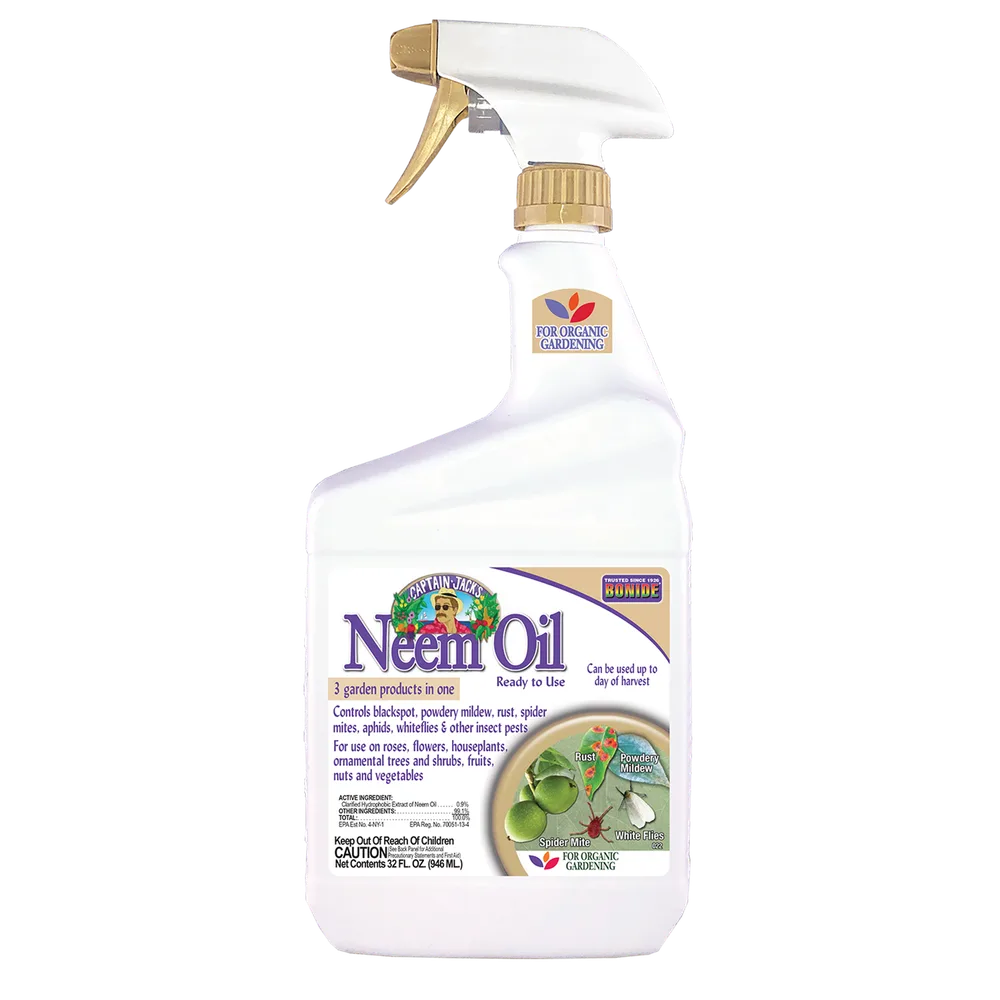
Bonide Neem Oil RTU is the easiest neem format in the pool because it is already mixed. The locked record lists clarified hydrophobic extract of neem oil at 0.90%. Recorded sites include roses, flowers, houseplants, ornamentals, fruits and vegetables, along with nuts. Pests are named on the current label.
Those site names are a starting point, not a universal crop approval. Check the Bonide product page and EPA registration 70051-13-4 for the exact pest and crop. The label also gives the application and re-entry directions.
Pros: Ready-to-use neem format; wide recorded garden-site range; active ingredient is identified.
Cons: Pest and crop directions vary; plant response and weather limits still require label reading.
3. Bonide Neem Oil Concentrate
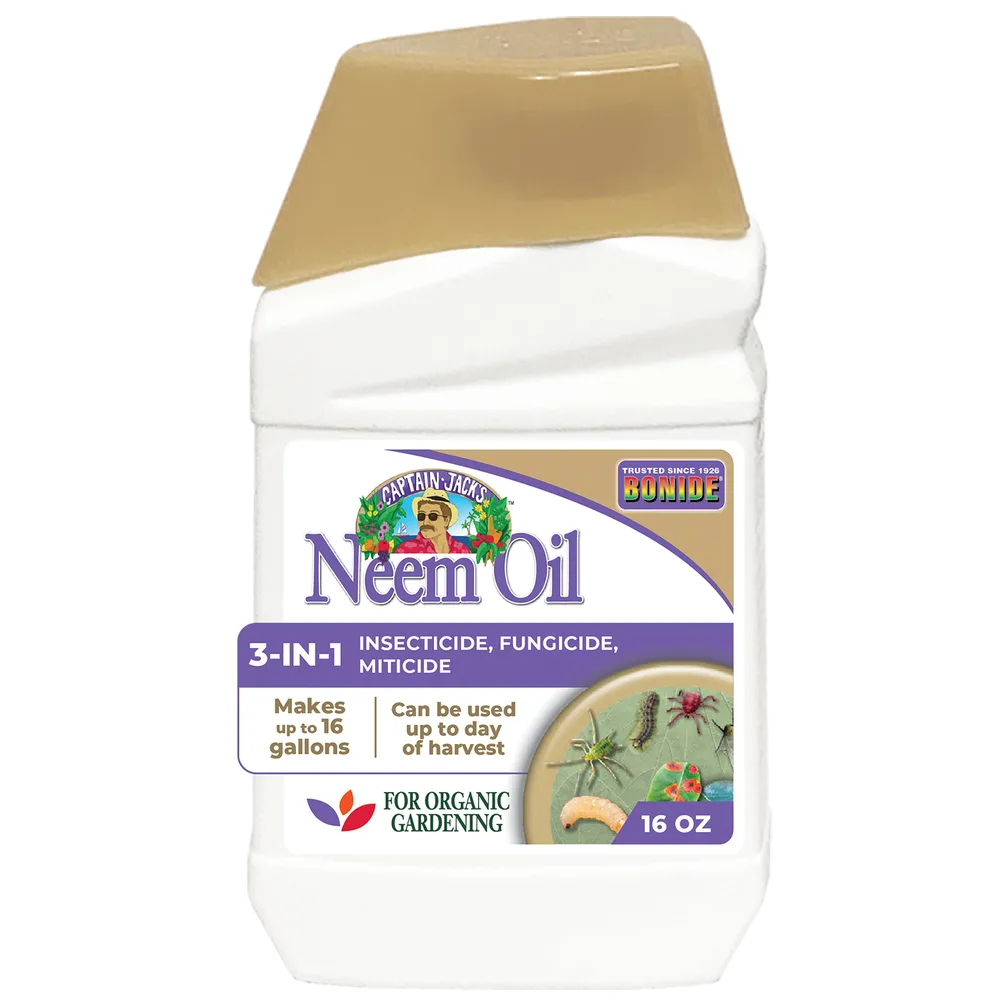
The concentrate version lists clarified hydrophobic extract of neem oil at 70.00% and garden and ornamental sites in the locked record. It can suit a buyer who prefers a concentrate for repeated label-directed garden applications, but the dilution step is the whole point of the product.
Use the Bonide product page and current EPA label 70051-2-4. Measure and apply only as the current label directs. Do not borrow a dilution from Neem Oil RTU or another brand.
Pros: Concentrate format; garden and ornamental site record; active ingredient amount is documented.
Cons: Exact dilution and application are required; the concentrate is not interchangeable with the RTU product.
Check Bonide Neem Oil Concentrate
4. Bonide Insecticidal Soap RTU
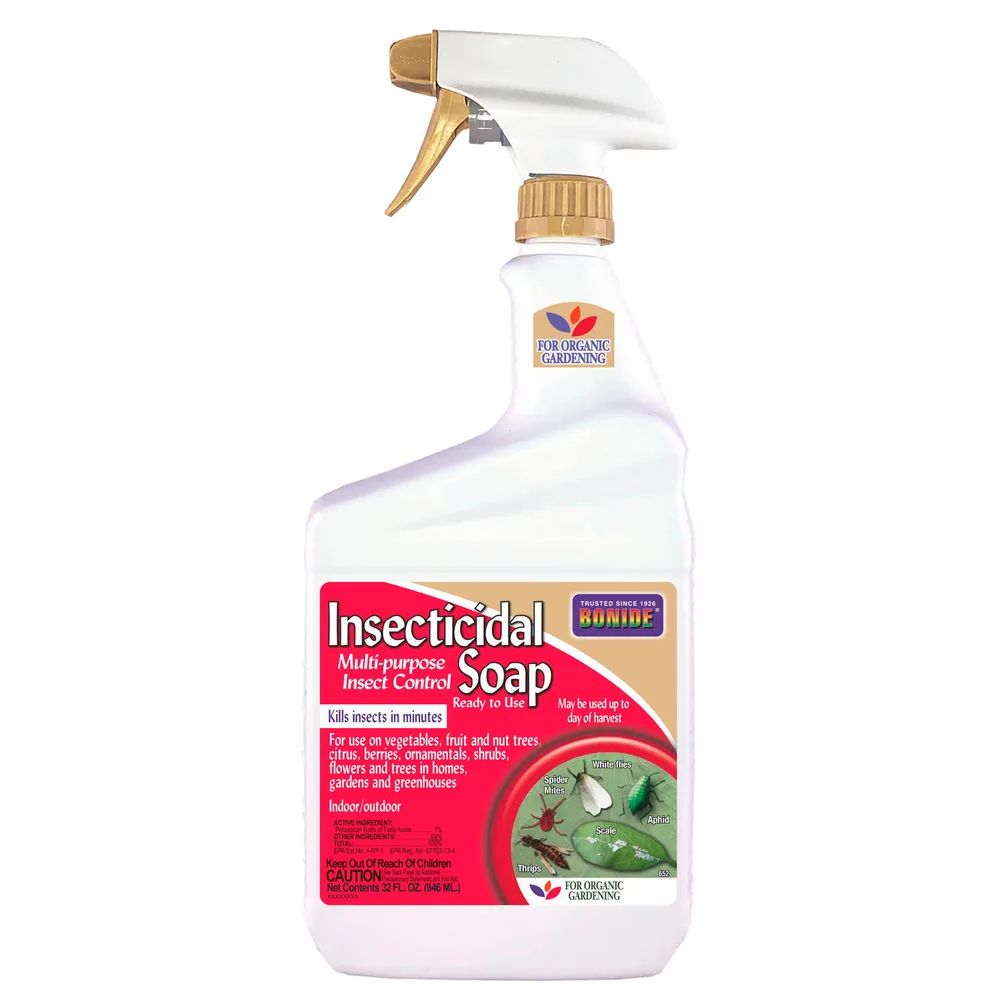
Bonide Insecticidal Soap is the narrower target choice. The locked record lists potassium salts of fatty acids at 1%, with soft-bodied insects and mites named on the label. Recorded sites include indoor and outdoor homes, gardens, plus greenhouses.
The narrower scope is useful when it matches the pest. Do not choose it because the name sounds gentle. Do not infer a people, pet, plant, edible-crop, or greenhouse rule. Check the Bonide product page, Bonide label, and EPA registration.
Pros: Ready-to-use; soft-bodied pest and mite record. The label lists indoor and outdoor sites, plus greenhouses.
Cons: Narrower target list; product name does not replace current-label precautions.
Check Bonide Insecticidal Soap
5. Monterey Garden Insect Spray
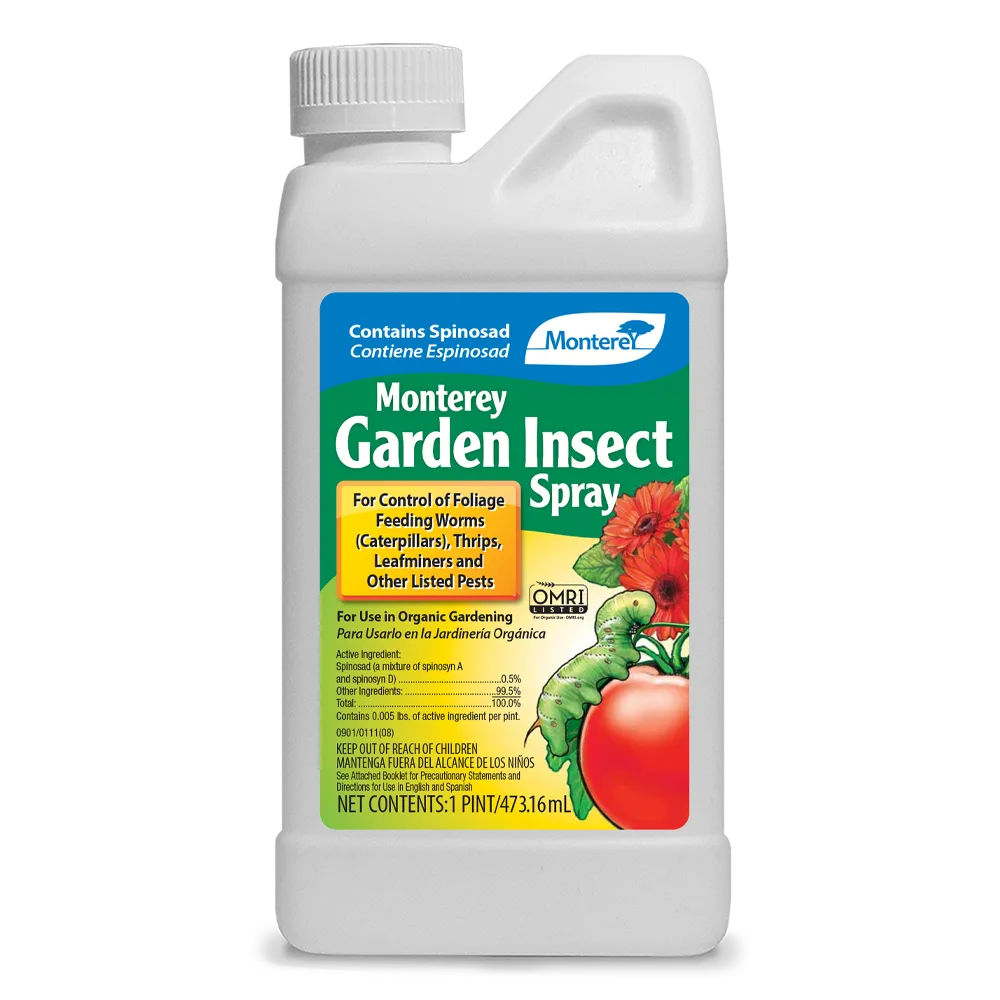
Monterey Garden Insect Spray is a spinosad concentrate with 0.50% in the locked record. Its labeled targets are pests named on the current product label. The recorded sites include outdoor residential gardens, lawns, ornamentals, plus greenhouse sites.
Concentrate means exact dilution and application directions matter. Read the crop, pollinator, and weather sections too. See the Monterey product page and current label. Use the lawn or crop direction that matches your site.
Pros: Concentrate for several recorded garden sites; spinosad amount is documented; lawn and greenhouse sites are included.
Cons: Dilution is label-directed; pollinator and crop directions are not interchangeable.
Check Monterey Garden Insect Spray
6. Monterey Garden Insect Spray RTU
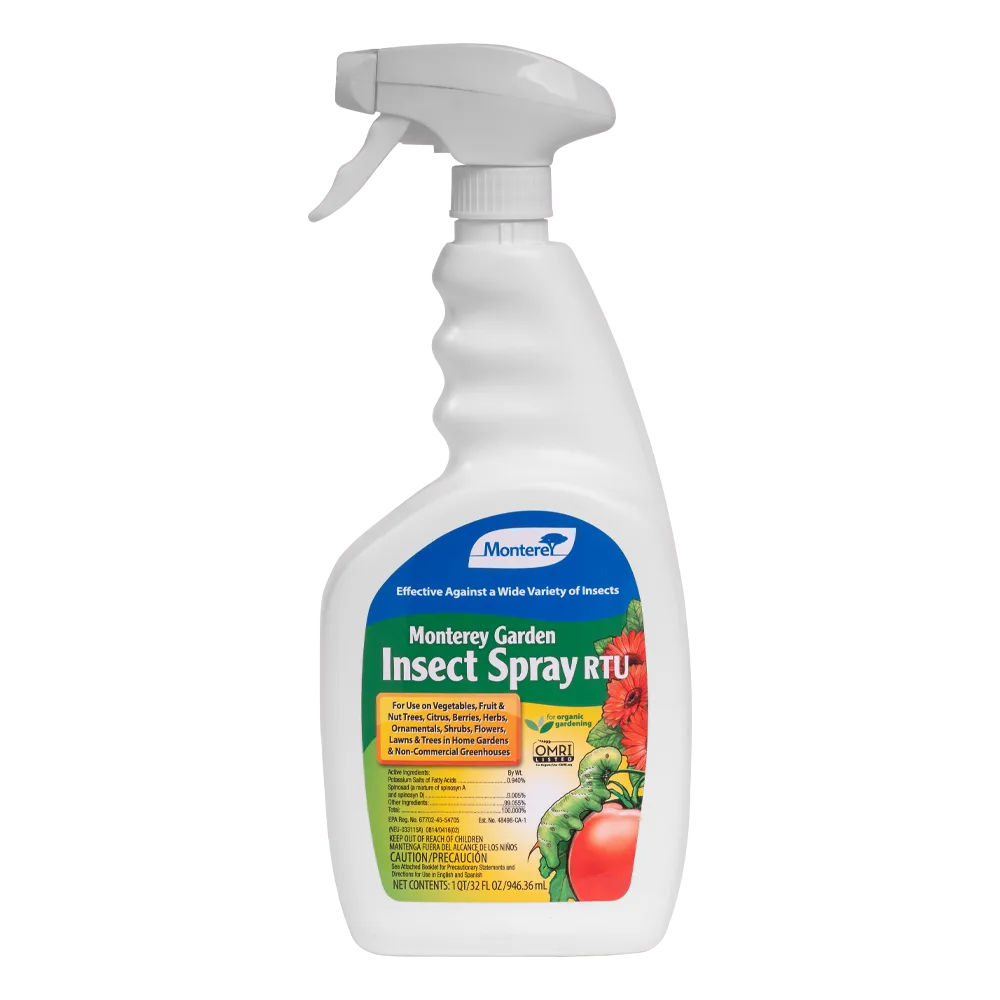
The RTU version lists potassium salts of fatty acids at 0.940% and spinosad at 0.005%. The locked site record includes outdoor residential home gardens, lawns, ornamentals, plus greenhouse sites. Pests and crops are named on the current label.
It is easier to pick up and use than a concentrate, but it still needs a crop and pest match. Check the Monterey RTU page and current RTU label.
Pros: Ready-to-use; the site record covers garden and lawn locations, along with ornamentals and greenhouses; active ingredients are listed.
Cons: Crop and pest directions remain specific; ready-to-use does not mean use-anywhere.
Check Monterey Garden Insect Spray RTU
7. Monterey Horticultural Oil
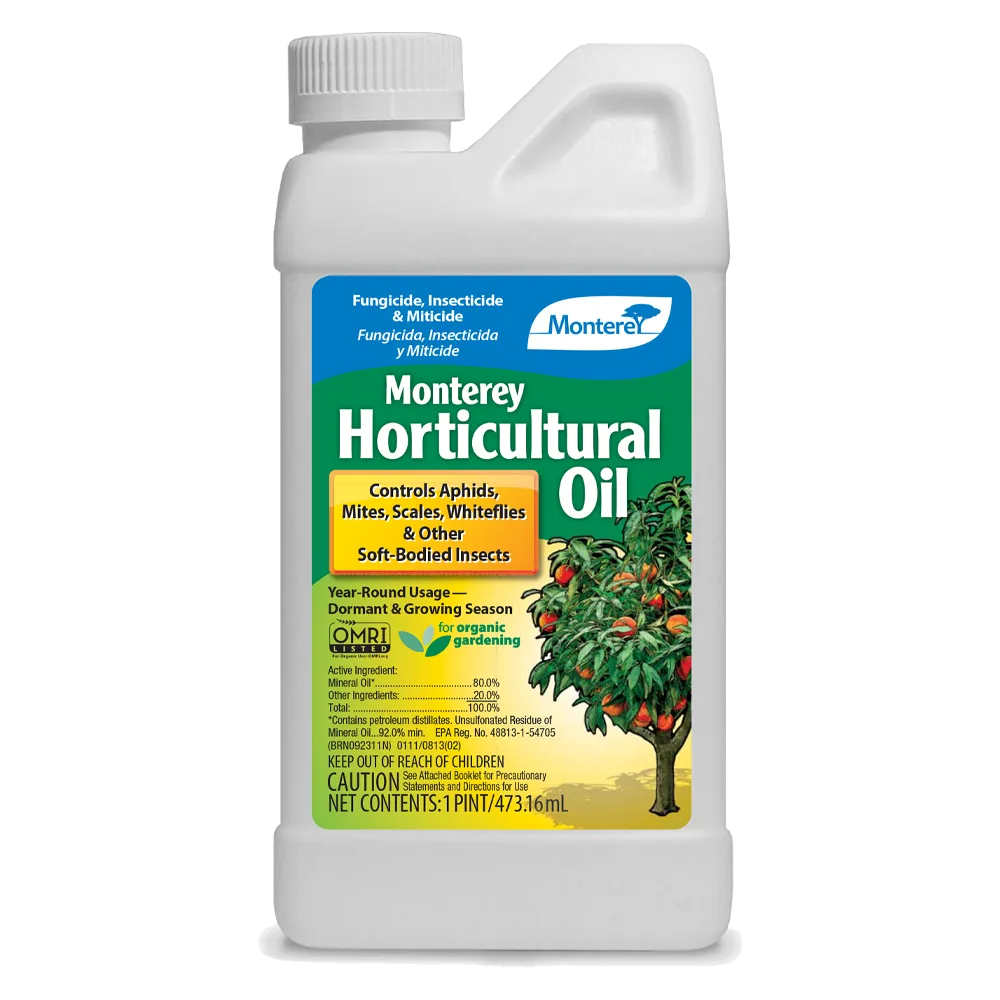
Monterey Horticultural Oil is the mineral-oil concentrate in the group. The locked record lists mineral oil at 80.0% and garden and ornamental sites, with pests named on the current label. Its tradeoff is the number of label variables that can matter together, including plant, weather, dilution, and application limits.
Read the Monterey product page and current label before use. Do not combine it with a different product’s directions.
Pros: Different active-ingredient class; garden and ornamental site record; mineral-oil amount is documented.
Cons: Concentrate needs exact dilution; plant and weather restrictions are label-dependent.
Check Monterey Horticultural Oil
Buying criteria for garden products
Treat the word organic as a search and gardening-category clue, not a product shortcut. Oregon State Extension’s natural insecticides publication discusses the limits of natural and organic terminology. The current pesticide label still decides the target, crop, site, application, re-entry, and precautions.
Identify the pest before choosing the bottle. Captain Jack’s, neem, soap, spinosad, and horticultural oil do not have identical target lists. Check whether the product is ready-to-use or a concentrate. Concentrates require exact label-directed dilution. Ready-to-use products still require label-directed application.
Check flowers, pollinators, water, edible crops, greenhouse use, weather, and drying or re-entry directions on the current label. University of Minnesota Extension is useful for pest identification and beneficial-insect context. For a garden at the end of a long lot, the large-garden hose guide is a separate equipment decision, not a pesticide recommendation.
For the bed and watering decisions around pest control, compare the raised-bed compost guide and flower-bed irrigation guide.
Frequently asked questions
What is the best organic pest control for a garden?
Captain Jack’s Dead Bug Brew is the clearest ready-to-use starting point in this locked pool when its current label matches the pest and crop. The word organic does not remove the need to follow the pesticide label.
Are neem oil products organic?
The locked sources do not establish a blanket certification claim for these products. Bonide uses organic-gardening language for some product families, but that wording does not create universal-use permission. Check the current package and any certification you specifically need.
Can I use a garden spray on vegetables?
Only if the current label names the crop, pest, site, application, and harvest or re-entry directions that apply. A garden product page alone is not enough.
Can insecticidal soap be used on plants?
Do not make that assumption. Follow the current label for plant, crop, concentration, weather, and application directions. Product names do not replace those instructions.
Is horticultural oil better than neem oil?
They have different active ingredients and label directions. Monterey Horticultural Oil is a mineral-oil concentrate. Bonide Neem products use clarified hydrophobic extract of neem oil. Choose by the named pest, crop, site, and current label.
Recommendation
Start with Captain Jack’s when a ready-to-use spinosad garden spray fits the current label. Choose Neem RTU for a ready-to-use format or Neem Concentrate when its exact dilution directions fit your work. Use soap for its narrower target group, and compare Monterey’s spinosad and horticultural oil products only after checking the crop, pest, weather, and pollinator language.
Sources and methodology
She Gardens used the locked pest-control shortlist and source registry researched on 29 August 2026. Product facts came from the manufacturer and EPA links attached to each pick. Independent context came from Oregon State University Extension, University of Minnesota Extension, and Penn State Extension. She Gardens did not test these products. Check the current label, registration, package, and state rules before use.